
Hydrogen to Transform India’s Space, Transport, and Energy Future: ISRO Chairman

Bengaluru, September 19, 2025: Hydrogen is set to play a transformative role in India’s space missions, clean energy transition, and future transportation systems, said Dr. V. Narayanan, Chairman of ISRO, at the National Workshop on Hydrogen Fuel Technologies and Future Trends hosted by Alliance University in collaboration with the Indian Institute of Science (IISc).
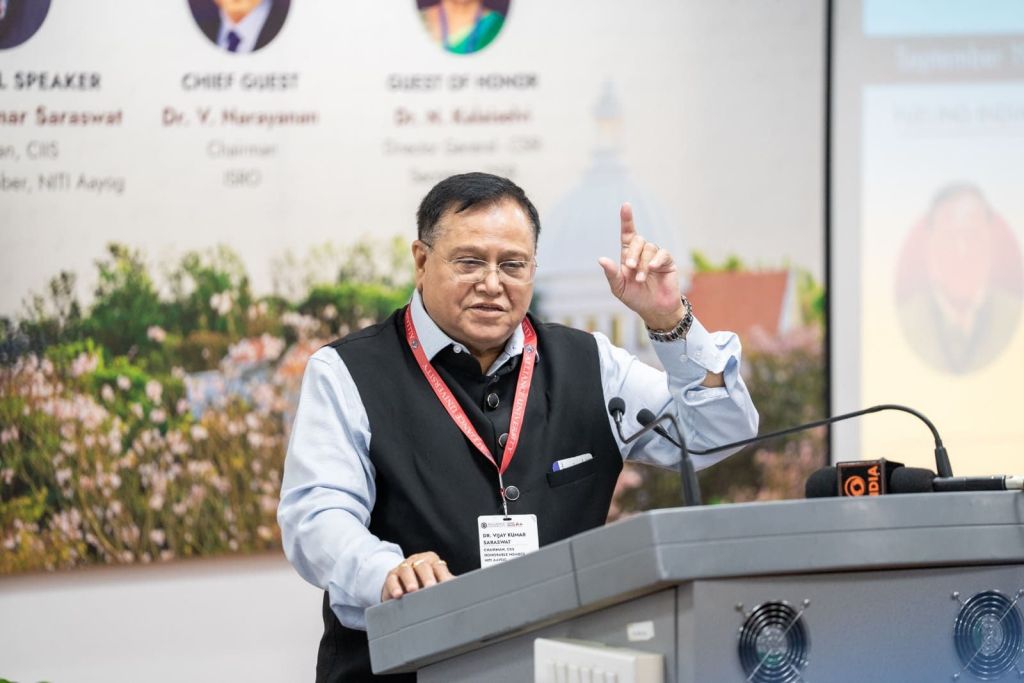
The workshop was attended by leading experts, including Dr. (Mrs.) N. Kalaiselvi, Director General of CSIR and Secretary, DSIR, as the Guest of Honour, and Dr. Vijay Kumar Saraswat, Chairman, CIIS and Member of NITI Aayog, who delivered the keynote address on India’s Hydrogen Policy and Future Trends.
ISRO’s Advances in Hydrogen
Dr. Narayanan underlined that hydrogen remains central to ISRO’s breakthroughs. “In January, we successfully launched our 100th GSLV Mk III mission powered by cryogenic stages using liquid hydrogen and liquid oxygen—a technology once denied to India but now fully indigenised,” he said. He also noted ISRO’s success in demonstrating a 100-watt space-based fuel cell, with a larger 20-kilowatt version under testing.
He recalled ISRO’s collaboration with Tata Motors in 2010–11 to test a hydrogen fuel cell bus, adding that in June 2025, five hydrogen-powered buses began commercial operations. “Hydrogen has vast applications beyond rockets, in aircraft, trains, automobiles, and fuel cells,” he said. However, he cautioned about safety challenges, pointing out the invisible nature of hydrogen flames and the urgent need for faster sensors with millisecond-level detection.
A Call for Hydrogen Economy
Dr. Kalaiselvi emphasized hydrogen’s role as a bridge between fossil fuels and renewables. “India must focus on production, storage, and application technologies to stay globally competitive. Breakthroughs in electrolyzers, sensors, and fuel cells will strengthen India’s leadership,” she said.
Dr. Saraswat stressed the need to accelerate the transition to a hydrogen economy. “Hydrogen and methanol-based technologies are critical for heavy transport and marine sectors where batteries are limited. India must reduce dependence on imports by investing in indigenous electrolyzers, compressors, and storage systems,” he said, adding that advanced safety research and 700-bar storage facilities are urgently needed.
Industry and Academia Push
Abhay G. Chebbi, Pro-Chancellor of Alliance University, highlighted hydrogen’s role in a sustainable future: “Hydrogen is often called the fuel of the future, but the truth is, the future is now.”
Pradip Kumar Pandey, Secretary, CIIS, said the workshop, attended by over 150 participants from academia and industry, reflects India’s rising momentum in hydrogen research and application.
National Green Hydrogen Mission
The deliberations also reinforced India’s commitment to the National Green Hydrogen Mission, which seeks to position India as a global hub for hydrogen production, usage, and exports. Experts discussed applications in mobility, industrial processes, and power generation while addressing cost, safety, and storage challenges.
City Today News 9341997936

 City Today News