
Narayana Health City Performs 100+ Robotic Cardiac Surgeries in a Month, Marking Major Milestone in Heart Care

Bengaluru, March 5: Narayana Health has crossed a significant milestone in advanced cardiac care, completing more than 100 robotic heart surgeries within a single month at its flagship facility, Narayana Health City. The achievement highlights the growing role of robotic technology in enabling highly precise and minimally invasive heart procedures.
Hospital officials said the milestone reflects both the surgical expertise of the cardiac team and the successful integration of advanced robotic systems that help deliver consistent outcomes for both adult and paediatric patients.
One of the more complex cases involved a 45 year old patient who had earlier undergone Coronary Artery Bypass Grafting (CABG), commonly known as heart bypass surgery. The patient later developed a tumour in the heart’s upper chamber, which posed a risk of obstructing blood flow.
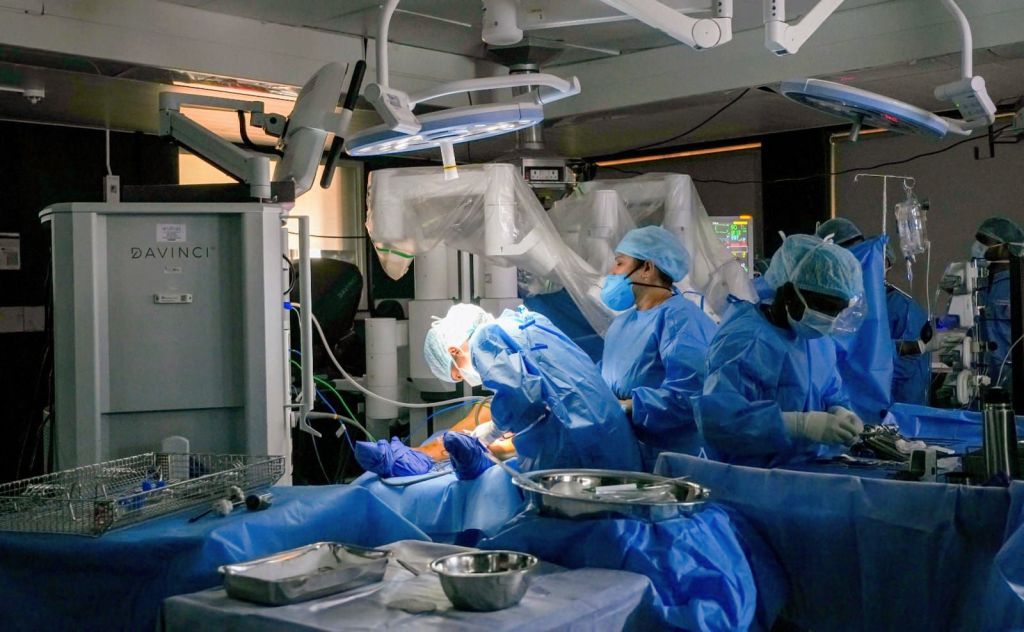
In such cases, reopening the chest through a conventional redo sternotomy carries significant risk, as previously implanted bypass grafts may be damaged during surgery. Since the patient’s earlier grafts were still functioning well, surgeons opted for a robotic-assisted minimally invasive procedure. The tumour was removed through a small incision on the right side of the chest using robotic instruments and high-definition visualisation, avoiding the need to reopen the breastbone.

Dr. Raghu M G, senior consultant in cardiothoracic surgery, said the patient was supported on a heart-lung machine through peripheral blood vessels during the operation. Instead of stopping the heart completely using conventional clamping techniques, surgeons used a specialised approach that allows the heart to gently quiver while the tumour is removed. Using robotic precision, the team accessed the left atrium and removed the growth while preserving surrounding structures and valve function. The patient recovered well and was discharged in stable condition.
In another case, a 46 year old patient suffering from severe narrowing of the mitral valve due to Rheumatic Heart Disease underwent robotic surgery to replace the damaged valve with a mechanical one. The robotic platform offered high-definition 3D visualisation and enhanced dexterity, allowing surgeons to operate with greater control within the heart.

Dr. Thiruthani Kumaran M M, senior consultant in adult cardiac surgery, said robotic procedures help avoid traditional open-chest surgery, which typically involves cutting through the breastbone. For patients, this often means less post-operative pain, reduced blood loss, quicker recovery and smaller scars. The surgery was completed successfully and the patient was discharged in stable condition.
Doctors also treated a 69 year old woman diagnosed with coronary artery disease along with Dextrocardia with Situs Inversus, a rare condition in which the heart and other internal organs are positioned as a mirror image of normal anatomy. Despite the unusual positioning of the heart and blood vessels, surgeons successfully carried out a robotic-assisted coronary bypass procedure.
Dr. Gagan Khullar, consultant in adult cardiac surgery, mentioned in his statement, operating on such patients is challenging because anatomical structures appear reversed. The robotic system’s enhanced visualisation and precision allowed surgeons to adapt safely to the patient’s anatomy. The surgery was successful, and the patient recovered smoothly.
Hospital authorities said robotic cardiac surgery requires close coordination between surgeons, anaesthesiologists and specialised technical teams. From pre-operative planning to post-surgery recovery, every step is carefully streamlined to maintain safety and precision while enabling faster recovery for patients.
The hospital also reported that patients travelled from several parts of India and abroad for robotic cardiac procedures during the month. About 35% of the patients were from Karnataka, followed by 15% from Tamil Nadu. Others came from states including West Bengal, Jharkhand, Assam and Andhra Pradesh, while nearly 10% of the patients travelled from Bangladesh.
According to the hospital, the diverse patient base reflects growing trust in advanced robotic cardiac care offered at the centre. With continued advancements in robotic technology, the institution says it aims to make complex heart procedures less invasive while expanding access to specialised cardiac treatment for patients across India and neighbouring regions.
City Today News 9341997936

 City Today News