Bengaluru — Under the blessings and guidance of His Holiness Sri Sri Subudhendra Teertha Swamiji, the Jayanagar 5th Block branch of Rayara Mata hosted special rituals on August 9 to commemorate the Aradhana Mahotsava of Guru Raghavendra Swamy. The event was organized under the leadership of the Mata’s senior administrator, Sri R.K. Vadindra Acharya.
As part of the evening’s cultural programme, acclaimed young vocalist Sri Jayateerth Tasgaonkar presented a soul-stirring Dasavani concert from 6:30 PM to 9:00 PM. He was accompanied by Sri Vignesh Bhagavat on harmonium,Sri Akshay Joshi and Sri Santosh Hoogar on tabla, and Sri Rajesh Kulkarni on taal.
Devotees applauded warmly, appreciating the artistry and devotional fervour of the performers. Speaking on the occasion, Sri Nandakishore Acharya expressed gratitude to the artists and the audience for making the event memorable.
Bengaluru, Aug. 9 — The HR Forum of the School of Social Work, St. Joseph’s University, organised an interactive, hands-on workshop on Power BI on Saturday, aimed at helping students gain practical skills in data visualisation and business intelligence.
The session was conducted by Mr. Surya Prakash, Associate Business Analyst, who introduced participants to Power BI’s core functions for converting raw data into meaningful insights. Using a sample dataset, he guided attendees through the process of creating interactive dashboards and reports, allowing them to practise the steps in real time. His clear explanations and structured approach made the learning both accessible and practical.
The event began at 11:00 a.m. in the AV Room, PG Block, with Aditi Anil of II MSW as the emcee. A prayer was led by Trisha, Rita and Nelisha, followed by a welcome address by Kavitha. The guest was honoured with a shawl and a potted plant as tokens of appreciation.
In her feedback, Sharanya commended the resource person’s engaging teaching style and hands-on guidance. Lakshmita delivered the vote of thanks, expressing gratitude to the speaker, faculty, and participants.
Faculty coordinators Dr. Premajyothi D and Fr. Francis Pinto SJ played a key role in organising the event, with additional support from Fr. Simon Paul D’Souza. Student coordinators Mr. Amalan Jerome and Ancita Krasta ensured smooth execution.
The workshop concluded at 1:00 p.m., leaving participants equipped with valuable Power BI skills for academic and professional use.
Immuneel Therapeutics’ Varnimcabtagene autoleucel (IMN-003A) sets new survival benchmark for aggressive B-cell Non-Hodgkin Lymphoma
Bengaluru, August 9, 2025 — In a breakthrough for Indian oncology, Immuneel Therapeutics has reported the country’s first known long-term remission in patients treated with a homegrown CAR T-cell therapy. Seven patients with aggressive blood cancers have crossed the two-year progression-free survival (PFS) milestone — a first for India.
The therapy, Varnimcabtagene autoleucel (IMN-003A), was evaluated in the IMAGINE Phase 2 trial for adult patients with relapsed or refractory CD19-positive B-cell Non-Hodgkin Lymphoma (B-NHL), one of the most aggressive blood cancers with limited response to standard treatment.
CAR T-cell therapy, globally considered a game-changer, has been out of reach for most Indian patients due to high costs and complex logistics. Immuneel’s success demonstrates that advanced, next-generation treatments can be developed and scaled within India while achieving globally comparable outcomes.
Key Clinical Results
First Long-Term Survivors in India: Seven trial participants have surpassed two years without disease progression, showing durable remission.
Strong Response Rates: IMN-003A achieved an 83% overall response rate (ORR) at Day 90, 50% ORR at Day 365, and an 83% complete response rate, setting new benchmarks for Indian CAR T trials.
National Scale-Up: More than 50 patients across leading hospitals have now been treated, with consistent outcomes and a favourable safety profile.
Government-Backed Research: Supported by a BIRAC grant under the Department of Biotechnology’s BIPP scheme, the trial reflects strong national endorsement.
Kiran Mazumdar-Shaw, Co-Founder & Board Director, Immuneel Therapeutics, said: “This achievement validates our mission to make world-class cancer therapies accessible and affordable. Long-term survivors from a Made-in-India CAR T therapy prove the transformative power of local innovation.”
Amit Mookim, CEO & Board Director, Immuneel Therapeutics, added:“Crossing the two-year survival milestone highlights India’s capability to deliver durable, next-generation treatments. Our priority remains expanding access and impact.”
With sustained results in over 50 patients, Immuneel’s work signals a new era for Indian cancer care — one where high-impact therapies are developed in India, for both domestic and global needs.
IIM Bangalore Launches India’s First PEVC Centre of Excellence: Tony James Centre for Private Equity and Venture Capital Alumnus Mathew Cyriac’s endowment honours global investment leader Tony James
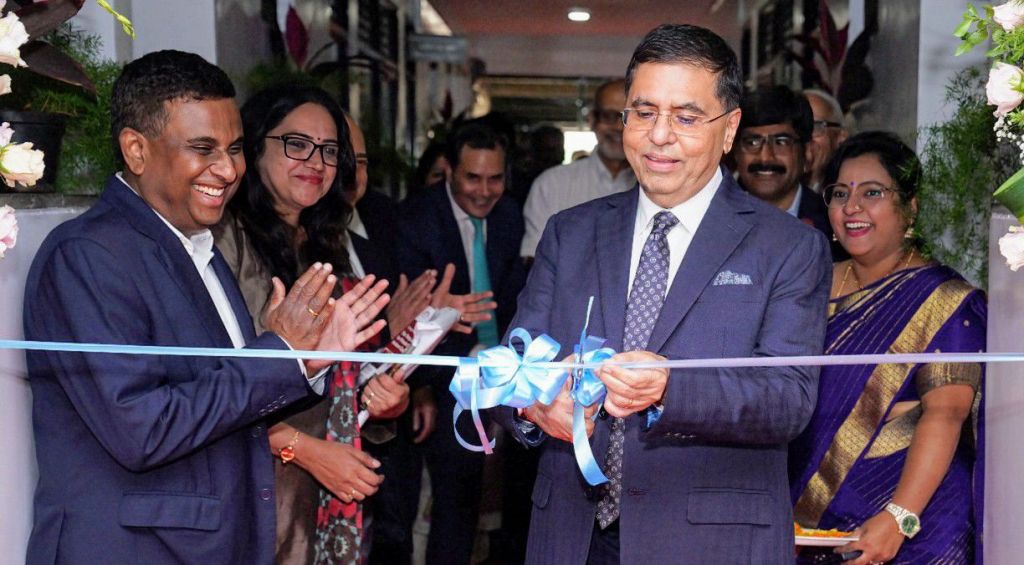
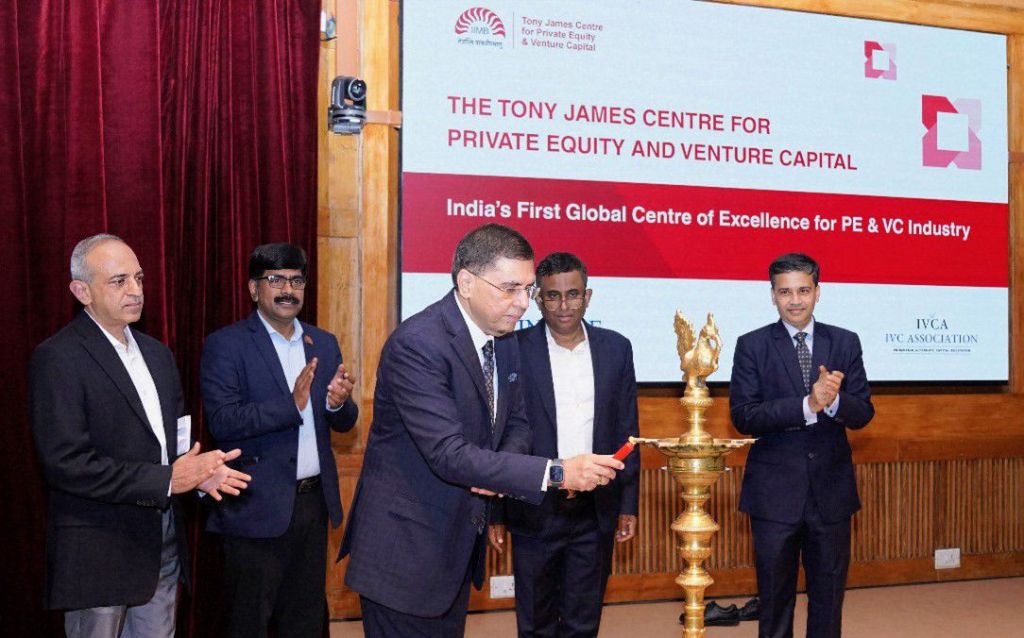
Bengaluru, August 7, 2025: Marking a significant milestone in India’s alternative investment landscape, the Indian Institute of Management Bangalore (IIMB) has inaugurated the Tony James Centre for Private Equity and Venture Capital — the country’s first Centre of Excellence focused exclusively on private equity and venture capital (PEVC).
The Centre has been established through a generous endowment by Mr. Mathew Cyriac, an accomplished member of IIMB’s PGP Class of 1994, Institute Gold Medallist, and recipient of the 2025 Distinguished Alumni Award. Mr. Cyriac is currently Chairman of Florintree Advisors and Co-Founder of Yali Capital.
The initiative, one of the largest alumni contributions in IIMB’s history, was formalized through an MoU signed on August 24, 2024. The endowment will support the Centre’s development, fund scholarships for PGP and doctoral students, and honour faculty mentors by naming four classrooms after prominent professors from the finance area.
Named in tribute to Mr. Hamilton “Tony” James — former President, COO, and Executive Vice Chairman of Blackstone — the Centre aims to foster global-level research, education, policy dialogue, and industry collaboration in the PEVC domain.
The launch event brought together key figures from the PE, VC, and financial services sectors, highlighting the Centre’s ambition to become a knowledge hub for India’s fast-evolving investment ecosystem.
Speaking at the event, Professor Sourav Mukherji, Dean (Faculty, Alumni Relations and Development), said, “It is heartening to see an alumnus return to give back in such a meaningful way, especially in an area that is vital to both academia and industry. This Centre stands as a symbol of how alumni can inspire future generations by enabling cutting-edge research and fostering a strong sense of institutional responsibility.”
Professor Dinesh Kumar, Director In-charge, IIMB, added, “High-impact research requires serious capital. This contribution by Mr. Cyriac will allow IIMB to attract world-class talent, invest in key infrastructure, and strengthen our global research footprint. It is a major step towards positioning IIMB as a research-driven institution of international repute.”
A Vision for the Future of Indian Investing
In his address, Mr. Mathew Cyriac spoke of the need for innovation in India’s maturing investment market. “As India’s private equity and venture capital space evolves, we need research and strategy that is deeply rooted in the Indian context but aligned with global standards,” he said.
He noted that the concept for the Centre emerged during IIMB’s Golden Jubilee celebrations, and shared that he wanted to give back by building something foundational and future-oriented. “IIMB has always been at the forefront in finance education. I saw an opportunity to strengthen that reputation with a Centre that could make a real difference to the industry and academia alike,” he explained.
Mr. Cyriac emphasized that the Centre would serve a broad spectrum of stakeholders—including students, researchers, PEVC firms, and Limited Partners (LPs)—acting as a bridge between academic insight and industry practice.
He also fondly recalled his student years and acknowledged the faculty members whose guidance had shaped his cohort, dedicating part of the endowment to honour their legacy through classroom naming.
Bengaluru, August 7, 2025 — Two recent clinical studies conducted by Fortis C-DOC Hospital for Diabetes and Allied Sciences, in collaboration with the National Diabetes, Obesity and Cholesterol Foundation (N-DOC), New Delhi, have revealed that controlled consumption of select Indian mango varieties may support blood sugar stability and improve key metabolic markers in individuals with type 2 diabetes.
These findings mark a significant shift from traditional dietary advice that has long discouraged mango consumption among diabetics. The research, published in the European Journal of Clinical Nutrition (accepted for publication) and the Journal of Diabetes & Metabolic Disorders (published online on August 6, 2025), offers compelling evidence that mangoes can be safely included in diabetic diets — under strict nutritional guidance.
The studies were led by Padma Shri awardee Dr. Anoop Misra, Executive Chairman of Fortis C-DOC, and Dr. Sugandha Kehar, who served as the principal investigator and first author.
Study 1 – Glycemic Stability Comparable to Bread (EJCN – Accepted for Publication)
This study involved 95 participants — 45 with type 2 diabetes and 50 without — who were evaluated using Oral Tolerance Tests (OTT) and Continuous Glucose Monitoring (CGM). Participants consumed either 250 grams of Indian mangoes (Safeda, Dasheri, or Langra) or a calorie-equivalent portion of white bread.
Key Findings:
Mangoes produced a similar or lower glycemic response than bread in both diabetic and non-diabetic groups.
Over three days of CGM tracking, diabetic participants who consumed mangoes showed a significantly lower Mean Amplitude of Glycemic Excursion (MAGE) — a key indicator of glucose variability — suggesting better blood sugar control.
Study 2 – 8-Week Clinical Trial Shows Metabolic Gains (Published in J. Diabetes & Metabolic Disorders)
This randomized controlled trial tracked 35 individuals with type 2 diabetes over eight weeks. Participants were assigned to consume either 250 grams per day of Safeda or Dasheri mangoes or an equivalent amount of white bread for breakfast.
Results from the mango group included:
Reductions in fasting blood glucose, HbA1c (long-term blood sugar), and insulin resistance (HOMA-IR)
Decreases in body weight, waist circumference, and skinfold thickness, indicating improved body composition
Significant increases in HDL (good cholesterol) levels
Dr. Anoop Misra stated, “These are the first well-controlled studies showing the health benefits of incorporating small portions of mangoes in place of refined carbs like bread in a diabetic diet. However, these must be included under the guidance of a dietitian and aligned with the individual’s health status.”
Dr. Sugandha Kehar added, “Mangoes have long been wrongly blamed for raising blood sugar. Our findings suggest that, within the framework of a medically supervised diet, they may actually offer health benefits.”
Re-evaluating Mangoes in Indian Diabetic Diets
India has one of the world’s highest rates of type 2 diabetes and is also the world’s largest producer and consumer of mangoes. While mangoes have traditionally been avoided in diabetic diets due to their natural sugars, these new findings challenge that notion — suggesting they can be a healthy alternative when consumed in moderation and in place of refined carbohydrates.
Both studies were approved by institutional ethics committees, registered with ClinicalTrials.gov, and supported by the Indian Council of Medical Research (ICMR).




 City Today News
You must be logged in to post a comment.