
Japan–India Mobility Summit 2026 highlights push for clean, smart and sustainable mobility
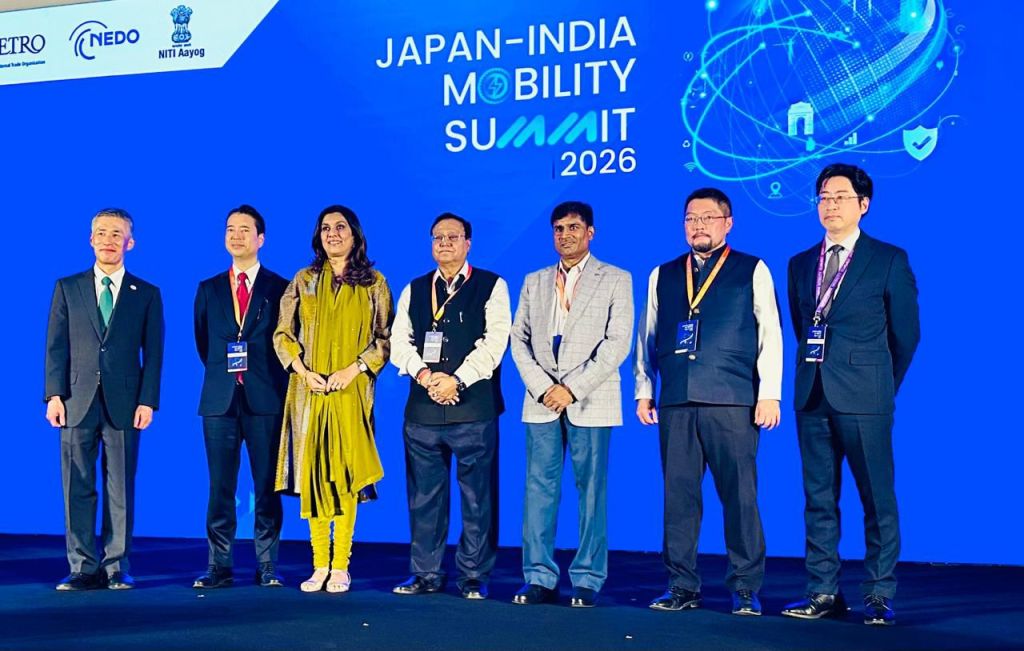
Bengaluru, March 9: The Japan–India Mobility Summit 2026 (JIMS 2026), held at the Taj West End in Bengaluru, brought together policymakers, industry leaders and technology innovators from both countries to strengthen cooperation in building the next generation of sustainable mobility solutions.
The summit was organised by Japan’s Ministry of Economy, Trade and Industry (METI) in partnership with the Japan External Trade Organization (JETRO) and the New Energy and Industrial Technology Development Organization (NEDO), in collaboration with NITI Aayog and several industry stakeholders.
More than 200 senior representatives from government agencies, automobile manufacturers, suppliers, global capability centres, research institutions and mobility start-ups participated in the event. Discussions focused on accelerating collaboration in areas such as advanced mobility technologies, energy transition, intelligent transport systems and next-generation mobility platforms.
The summit also explored opportunities in emerging areas including hydrogen mobility, smart urban transport networks and integrated multimodal infrastructure. Building on commitments made during last year’s bilateral discussions, the summit aimed to operationalise initiatives under the Next-Generation Mobility Partnership (NGMP) and the Initiative for Clean Energy Mobility and Infrastructure for Next-Generation (ICEMAN). Key themes included multi-pathway decarbonisation through electric vehicles, biofuels, green hydrogen and flexible-fuel vehicles, along with digital and smart mobility solutions such as software-defined vehicles, mobility-as-a-service platforms and collaborations between global capability centres.
Speaking at the event, Keisuke Hosonuma, Director for Automotive International Trade Policy at METI, said the shift towards carbon-neutral mobility would not follow a single path. “Different markets require different solutions depending on economic conditions, policy frameworks and consumer needs. Japan’s approach combines electrification, hybrid technologies and next-generation energy systems while strengthening global partnerships. India is a crucial partner in this transition,” he said.
Addressing the gathering, S. Selvakumar, Principal Secretary for Commerce and Industries, Government of Karnataka, said the state had emerged as a major hub for mobility innovation. With more than 800 research and development centres, a strong network of global capability centres and progressive policies such as the Clean Mobility Policy 2025–2030, Karnataka is building an integrated ecosystem that supports the entire mobility value chain, from design and engineering to manufacturing and deployment, he noted.
In his opening remarks, V. K. Saraswat, member of NITI Aayog, highlighted the complementary strengths of India and Japan in shaping the future of mobility. While India offers scale, a rapidly expanding market and strong capabilities in software and artificial intelligence, Japan brings deep technological expertise, engineering excellence and global leadership in safety and mobility systems, he said.
Saraswat added that the next phase of cooperation should focus on joint technology development, including hydrogen mobility, smart transport systems and integrated mobility platforms. “Mobility transformation today goes beyond a single sector. It involves a broader redesign of energy systems, infrastructure, data networks and industrial capabilities,” he said.
The summit received support from industry bodies such as the Society of Indian Automobile Manufacturers (SIAM), Japan Automobile Manufacturers Association (JAMA), Automotive Component Manufacturers Association of India (ACMA), Confederation of Indian Industry (CII) and the Federation of Indian Chambers of Commerce & Industry (FICCI).
Organisers said the summit sought to translate bilateral discussions into concrete projects by aligning clean energy mobility strategies with India’s rapidly growing digital and technology ecosystem, paving the way for long-term industrial cooperation between the two countries.
City Today News 9341997936
 City Today News
You must be logged in to post a comment.