
Bengaluru, February 2026: The Organization for Rare Diseases India (ORDI) on Tuesday hosted a press conference in Bengaluru ahead of its annual Racefor7 awareness run scheduled for February 22, calling for urgent policy action, equitable healthcare access, and sustained investment in rare diseases.
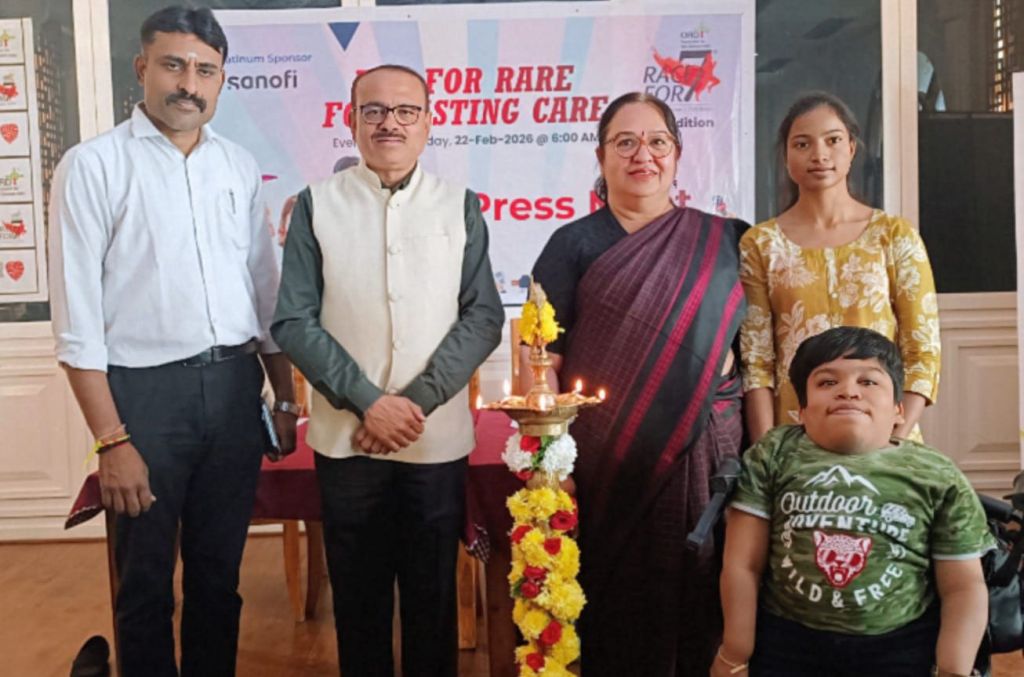
The event brought together medical experts, patient advocates, caregivers, and industry representatives to highlight the challenges faced by India’s rare disease community and the pressing need for coordinated action across diagnosis, treatment, and long-term care.
Addressing the media, Prasanna Shirol, co-founder and executive director of ORDI, said community-driven initiatives like Racefor7 play a critical role in pushing rare diseases into the public and policy spotlight.
“While awareness and policy frameworks around rare diseases have evolved in India, the focus must now move to structured and sustained implementation,” he said. “Patients need timely diagnosis, comprehensive supportive care, and equitable access to available therapies, irrespective of geography or affordability. Equitable access must be the standard of care, not a privilege.”
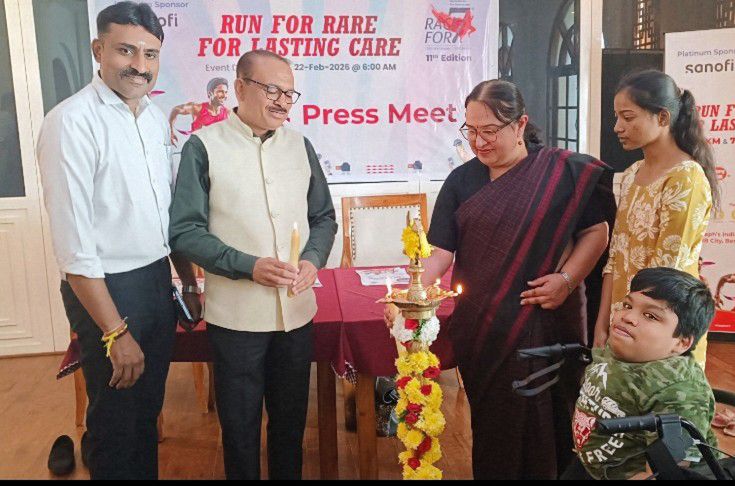
Dr Meenakshi Bhat, head and director of the Centre for Human Genetics (CHG), Karnataka, said the country’s approach to rare genetic disorders is gradually shifting from prevention to treatment following the National Policy for Rare Diseases, 2021.
“Therapies currently exist for barely five per cent of the nearly 7,000 known rare disorders, and most are expensive and imported,” she said. “India must prioritise the development of indigenous and affordable treatments. Where therapies do not exist, clinicians and scientists must collaborate to create new solutions.”
She added that CHG has set up an Institute of Advanced Genome Editing and Gene Therapy with support from the Karnataka government to develop new treatment strategies.
Providing an industry perspective, Dr Mayur Shah, head of the rare disease franchise at Sanofi India, said rare diseases must not be overlooked due to their low prevalence.
“For more than three decades, Sanofi has worked alongside the rare disease community as a partner in access, dignity, and hope,” he said. “Racefor7 demonstrates the power of collective action in turning awareness into real impact. Corporate leadership in this space goes beyond drug development—it includes advocacy, policy engagement, and building ecosystems of care.”
A key highlight of the press conference was the participation of rare disease patients and caregivers, who shared personal accounts of prolonged diagnostic delays, emotional strain, and the financial burden of managing lifelong conditions. Their experiences underscored the need for faster and wider access to genetic testing, improved awareness among frontline healthcare providers, stronger financial protection mechanisms, and effective implementation of existing policies.
Racefor7, ORDI’s flagship annual initiative held in observance of Rare Disease Day, brings together patients, families, doctors, researchers, students, corporates, and citizens in solidarity with the rare disease community. This year’s edition aims to deepen public awareness, encourage early diagnosis and referral, and advocate for improved access to treatment and long-term care.
Speakers at the conference noted that while India’s rare disease policy landscape is evolving, significant gaps remain in implementation. They called for wider disease inclusion under support frameworks, strengthening of Centres of Excellence, enhanced research and data collection, and stronger public-private partnerships to improve access to care.
City Today News 9341997936
 City Today News
You must be logged in to post a comment.