90% of blindness is preventable or treatable. Yet 1 Bn people globally live with vision loss.
In 2020 alone vision impairment resulted in lost global economic productivity of $410.9 Bn.
Retinal conditions like DR, DME & nAMD can result in permanent & irreversible sight loss.
21 million people are living with DME, a leading cause of vision loss among working-age adults.
20 million people are living with nAMD, a leading cause of vision loss in people aged 60 and older.
India is home to 1/3rd of the world’s blind population with 11+ Mn affected by retinal conditions, and 3.88 Mn people suffering from DME and nAMD.
Contribution of retinal disorders to blindness in India has increased from 4.7% (2010) to 8% (2019).
With over 100 Mn diabetics & an aging population, retinal health must be prioritized in India.
The ever increasing socio-economic burden of vision loss is a growing public health concern, both globally and in India. Vision loss is the third-largest global impairment after anemia and hearing loss. While there exists general public awareness about certain kinds of visual impairments like cataract, glaucoma and refractive errors, visual disabilities arising out of retinal disorders is on a constant rise Globally, retinal diseases account for approximately 6% of blindness. Certain retinal disorders which are a consequence of uncontrolled blood sugar levels (DR and DME) and aging (nAMD), can be sight threatening, leading to permanent and irreversible vision loss, if not diagnosed and treated in a timely manner.
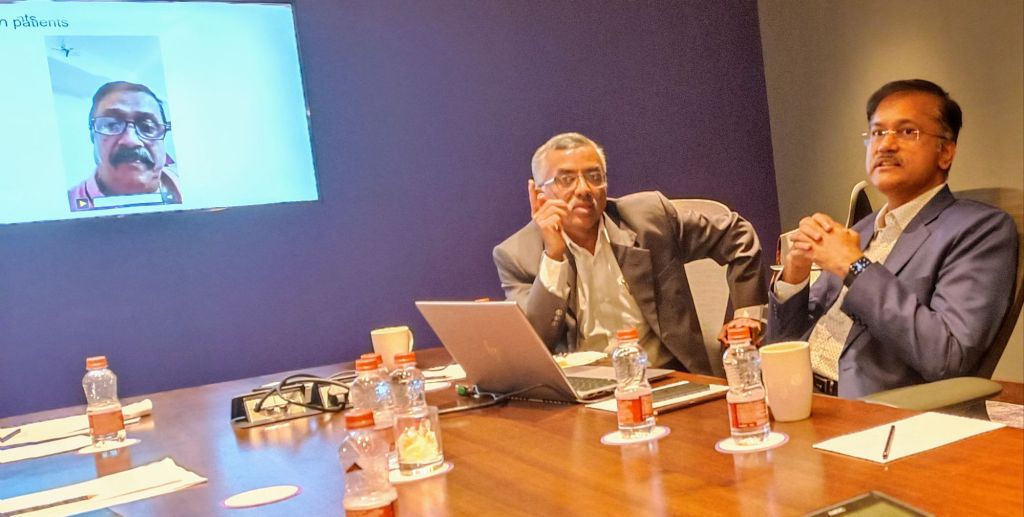
While initiatives in India like the National Program for Control of Blindness & Visual Impairment (NPCBVI) have made commendable strides in the reduction of cataract and glaucoma related blindness (anterior or front part of the eye), there is an urgent need to also drive focus on retinal health (posterior or back part of the eye); as damage to retina nerve cells is irreversible and can cause loss of central vision which is more debilitating, causing more risk of injury and poor quality of life. In India, there’s been an alarming increase in the past decade in the share of retinal disorders causing blindness. These numbers will continue to rise as our population grows, ages and the number of people living with diabetes and hypertension continues to increase.
Ecosystem challenges & barriers in diagnosis
Despite the magnitude of the growing concern around retinal health in India, there exists ecosystem barriers, policy gaps, awareness challenges and treatment adherence lapses:
Capacity constraints and an acute shortage of trained retina specialists: In India, the Ophthalmologist pool is highly skewed towards the anterior segment, accounting for almost 80% with only about 5% to 8% specializing in retina, that too concentrated in Tier 1 cities.
Lack of standardized treatment guidelines: In India, there exists a practice of regional variance in treatment protocols which severely impacts patient outcomes. A standard practice is ‘step therapy’ in which newer treatment options are reserved for recalcitrant patients, wherein the vision has already deteriorated to the extent that these innovative therapies demonstrate little or no result in restoring vision.
Poorly integrated health systems for diagnosis and patient referrals: Especially for diabetic patients, the referral pathways are fractured. Patients present themselves to retina specialists when these disorders have already reached advanced stages.
Treatment burden of available therapies: Existing treatments are burdensome, requiring frequent eye injections. This may lead to under-treatment, arising out of adherence gaps; which leads to further retinal damage.
Lack of public awareness: As a prevailing practice in our country, eye health is neglected. Families, corporates and institutions do not include retina in the annual health check up packages. General public is grossly unaware that conditions like diabetes can even affect vision.
Challenges in the current treatment landscape & need for innovative therapies
From a patient perspective, they fear being injected in the eye as part of their treatment. Add to that the challenge of getting frequent injections and the hardship of multiple visits to eye care facilities, while dealing with poor vision. This is what many face due to older treatment options like anti-VEGFs even though they are commonly used. Previously approved treatments have only partially addressed the processes – or ‘pathways’ – that drive the development and progression of nAMD and DME. There has been a need for innovation beyond standard IVT treatment.
While IVT injections (eye injections) have brought a promising new set of options for patients, there are still unmet needs in the treatment of DME & nAMD. Current treatment requires frequent injections that burden a patient with recurring cost, inconvenience of travel and the need to depend on a caregiver. Newer emerging treatments focus on providing better outcomes with less burden on patients in terms of number and frequency of injections.
Need to adopt advanced treatment options:
In order to have perfect vision, the vessels in our retina need to be stable and strong. However, the vessels of people living with retinal conditions are unstable, leaky, inflamed and grow abnormally. VEGF is one key pathway involved in the development and progression of retinal conditions. Blocking the VEGF pathway successfully stops vessels in the retina leaking blood and fluid, and new unhealthy vessels from growing. However, VEGF is not the only pathway involved. Ang-2 contributes to vascular instability, causes inflammation and facilitates and amplifies the actions of VEGF on vessels, potentially leading to a more severe condition in the long-term. Treatment options that target VEGF alone therefore only partially address the biology of the disease. We know that retinal conditions like DME and nAMD can lead to permanent and irreversible sight damage; and that the first chance of treatment is the best chance of treatment. So the goal is to treat patients with newer innovative therapies in first line settings, rather than reserving such therapies for patients whose sight condition has worsened over time.
Advanced treatment options, that block both pathways involving Ang-2 and VEGF-A, are designed to stabilize blood vessels, thereby reducing inflammation, leakage and abnormal vessel growth, will go a long way in providing sustained disease control and maintaining vision outcomes.
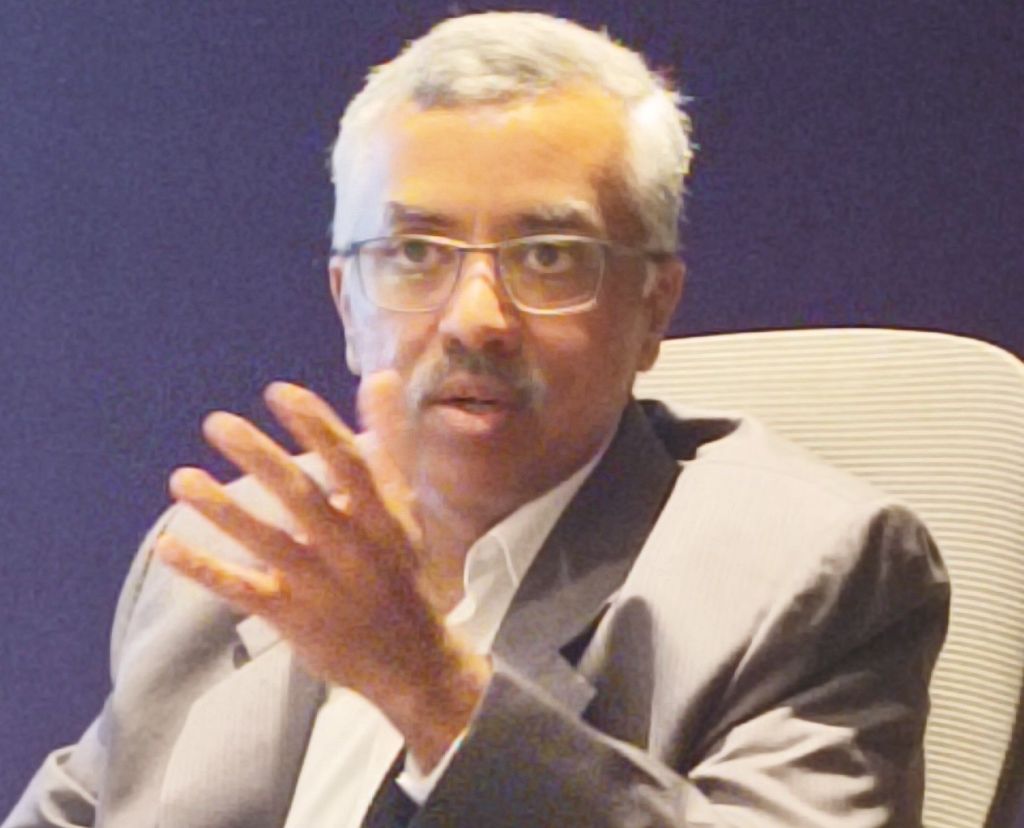
Patients dealing from vision loss face severe challenges like social exclusion, anxiety, depressive symptoms and many hardships in their everyday lives, limiting their ability to perform even the simplest of tasks. Add to this, the burdensome treatment schedule of multiple clinic visits and frequent eye injections. There is a need for newer, innovative treatment options that offer effective clinical benefits with extended treatment durability. Such treatment options not only provide convenience to patients, ensuring treatment adherence for best outcomes, but also ease the strain on our healthcare systems. – Dr. Vivek M Bhaskar – Senior Consultant (Vitreo Retinal) – Shekar Eye Hospital, Bangalore.
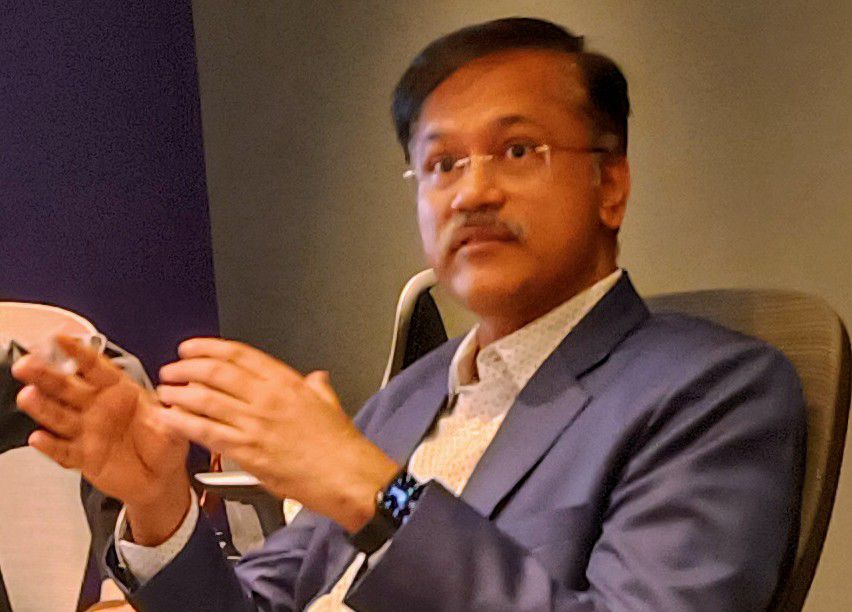
India has made great strides in the reduction of cataract and glaucoma related blindness. But unfortunately, the share of retinal related vision loss is on the rise in our country. A multitude of factors have contributed to this…lack of awareness, delayed diagnosis, poor lifestyles, rise in diabetic population, our country’s aging population, capacity constraints in our healthcare systems and a diluted policy focus on prioritizing retinal conditions. There is an urgent need to galvanize efforts to give retinal vision loss its due focus and attention. – Dr. Sribhargava Natesh, Director & Vitreo Retina Consultant, Nethra Eye Hospital, Bangalore.
Glossary of abbreviations
DR (diabetic retinopathy)
DME (diabetic macular edema)
nAMD (neovascular age-related macular degeneration)
anti-VEGF (Anti-vascular endothelial growth factors)
Ang-2 (angiopoietin-2)
SoC (Standard of Care)
MoA (Mechanism of Action)
IVT (Intravitreal)
Bn (Billion)
Mn (Million)
 City Today News
You must be logged in to post a comment.