
World Heart Day initiative urges motorists to avoid unnecessary honking and make daily commutes calmer

Bengaluru, September 21, 2026: Bengaluru’s traffic may move slowly, but the constant honking on its roads often shows no signs of slowing down. From crowded junctions and traffic signals to bumper-to-bumper stretches where vehicles have little or no room to move, unnecessary honking has become a routine part of the city’s daily commute.
Marking World Heart Day 2026, SPARSH Hospitals has launched ‘Horn Don’t Maadi’, a Bengaluru-focused awareness campaign aimed at encouraging motorists to rethink habitual honking and recognise its possible impact on everyday stress and overall well-being.
The campaign revolves around a simple question: “Can honking move the traffic? If not, what is all this noise doing to us?”
SPARSH Hospitals clarified that the initiative is not against the use of horns when required for road safety. Instead, it seeks to discourage honking caused by impatience, frustration or habit, particularly when traffic is already at a standstill.
The campaign was unveiled at a media briefing in Bengaluru, where the hospital’s leadership and cardiovascular specialists discussed the links between traffic-related stress, noise and heart health.
“‘Horn Don’t Maadi’ is about turning a familiar Bengaluru experience into a moment of awareness. We are not asking people to stop using the horn when safety demands it. We are encouraging them to pause and think about whether every honk is really necessary. Small changes in everyday behaviour can help create a calmer environment,” said Dr. Sharan Shivaraj Patil, Founder, Chairman and Chief Orthopaedic Surgeon, SPARSH Group of Hospitals.
Doctors noted that loud or unexpected sounds can activate the body’s stress response. While an occasional honk is not considered the primary concern, repeated exposure to stressful noise and other everyday stressors may contribute to chronic stress, which is among several factors associated with cardiovascular health.
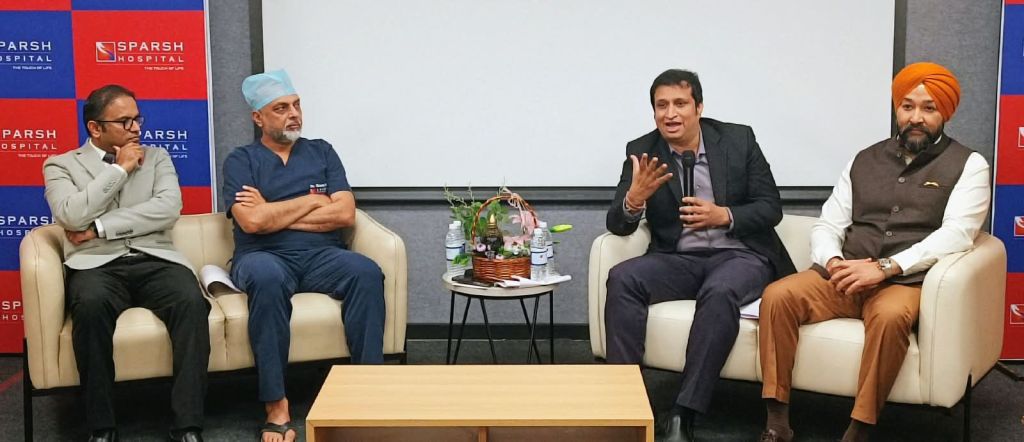
“An occasional honk is not the concern. It is repeated exposure to unnecessary and stressful noise that can add to the body’s stress response. When such stressors occur repeatedly, they can contribute to chronic stress, which is one of several factors that influence cardiovascular health,” said Dr. (Prof) Ranjan Shetty, Lead Consultant, Cardiologist and Group Medical Director, SPARSH Hospitals.
As part of the initiative, SPARSH Hospitals plans to take the campaign beyond the hospital and into Bengaluru’s neighbourhoods and roads. The activities will include public sign-ups, hospital and community engagements, radio and social media interventions, street vox pops, interactive traffic polls and doctor-led conversations.
The campaign will also feature influencer-led content under the message ‘Honk Not Okay Please’, aimed at encouraging people to rethink unnecessary honking in everyday situations.
The initiative does not call for the complete elimination of honking from Bengaluru’s roads. Instead, SPARSH Hospitals is seeking to make unnecessary and habitual honking less normalised while reinforcing a simple message: use the horn when safety requires it, not as a default response to traffic.
Through ‘Horn Don’t Maadi’, the hospital hopes to turn a familiar source of irritation on Bengaluru’s roads into a wider public conversation about mindful commuting, everyday stress and heart health.
City Today News 9341997936


