World Health Day: Experts call for equitable access to healthcare for blood cancer and blood disorder patients

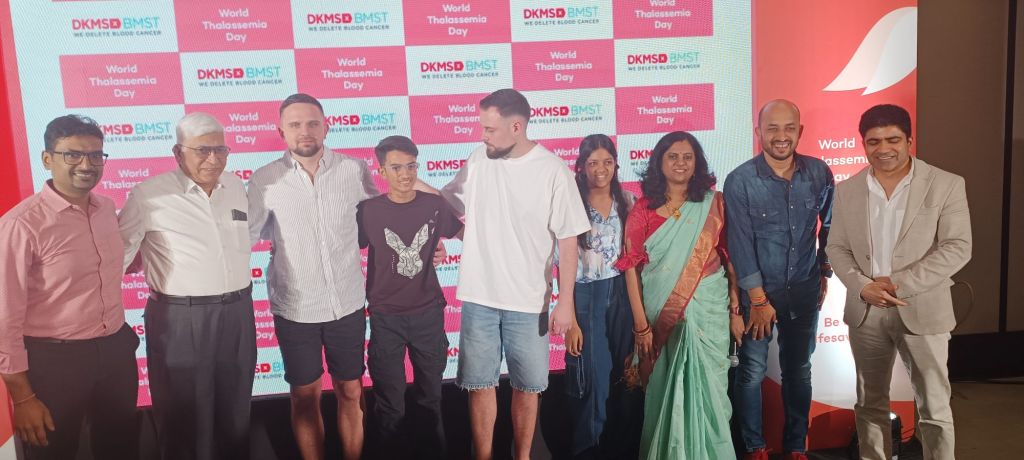
BENGALURU, 5 April 2024: 25-year-old Puneeth suffered from thalassemia major, which is a genetic blood disorder characterised by abnormal hemoglobin production and low production of red blood cells, since he was only nine. Battling with thalassemia as a child came with multifaceted challenges in Puneeth’s day-to-day activities.

Since Puneeth was diagnosed with this disease in 2008, he has undergone blood transfusions at a charitable hospital on a regular basis. A stem cell transplant was the only curative treatment option for Puneeth’s condition. It was only in 2020 when a Hospital in Bangalore conducted a free HLA typing camp in association with DKMS-BMST at their centre, where Puneeth and his elder brother Prajwal gave their cheek swab sample for HLA (Human Leukocyte Antigen) typing. The result showed that Puneet found a perfect match with his brother.

However, owing to financial constraints, his family was hesitant towards the transplantation. This is where the DKMS BMST Patient Funding program stepped in to help Puneeth successfully undergo his transplant in September 2022 and receive a second chance at life. The transplant yielded success, and the family now looks forward to a positive future ahead.

Puneeth was fortunate enough to find a matching donor in his family, whereas over 70% of the patients diagnosed with blood cancer or blood disorder are unable to find a match and urgently need a matching unrelated donor. DKMS-BMST has a mission to give such patients a second chance at life by registering potential stem cell donors from across India.

Dr. Govind Eriat, Consultant Hematology, Hemato-Oncology, and Bone Marrow Transplant at BGS Gleneagles Global Hospital, Bengaluru, said, “Karnataka bears a considerable burden of blood cancer and blood disorder cases contributing substantially to the state’s healthcare burden and the national statistics of over 100,000 cases annually. Stem cell transplants offer a ray of hope for patients battling this disease, providing them with a second chance at life. However, accessibility to combat this disease often remains a challenge, especially for economically underprivileged people. Initiatives like DKMS-BMST Thalassemia and patient funding programs provide critical support to those unable to get access to transplantation and help them get a second chance at life.”

Patrick Paul, CEO of DKMS BMST Foundation India, said, “Aligned with the theme of World Health Day “My Health, My Right,” we believe that everyone, regardless of background or circumstance, deserves access to quality health services, information, and the resources needed to live a healthy life. Through the Patient funding and and Thalassemia programs, DKMS-BMST has been instrumental in democratising access to stem cell transplantations nationwide. To achieve this, we have created an effective and streamlined program structure so we can help as many patients in need as possible. By alleviating financial constraints and fostering collaborations within the healthcare sector, we strive to empower individuals like Puneeth with the opportunity for enhanced quality of life and renewed hope.”

While advancements in medical science have improved outcomes for blood cancer and blood disorder patients, a significant hurdle remains – the availability of Human Leukocyte Antigen (HLA)-matched stem cell donors. An HLA match is crucial for a successful stem cell transplant, and the likelihood of finding a match is highest among individuals of similar ethnicity.
The current pool of potential stem cell donors is insufficient to meet the needs of all blood cancer and blood disorder patients. This disparity disproportionately affects Indian patients, who have a lower chance of finding a match due to limited donor diversity. Unfortunately, only 0.03% of the Indian population have registered as potential donors. This increases the need for more people of Indian ethnicity to register themselves.

To register as a potential stem cell donor, you must be a healthy Indian adult between 18 and 55. When you are ready to register, all you need to do is complete a consent form and swab the inside of your cheeks to collect your tissue cells. Your tissue sample is then sent to the lab to be analyzed for your HLA (Human Leukocyte Antigen) and listed anonymously on the international search platform for matching stem cell donors. If you’re eligible, register as a blood stem cell donor by ordering your home swab kit at http://www.dkms-bmst.org/register

City Today News 9341997936

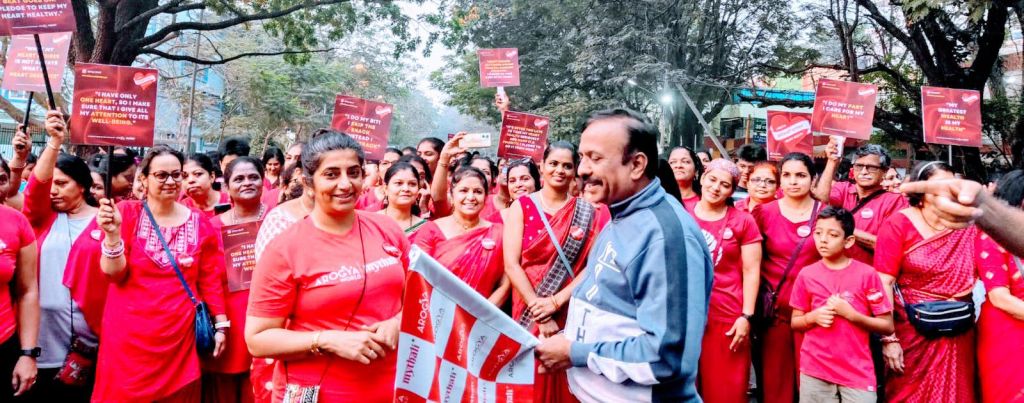
MyThali by Arogya World organized “Run In Red” even to raise awareness about Women’s Heart Health

National, 10th March 2024: MyThali, a program of Arogya World, organized the “Run In Red” event at Shalini Grounds, Jayanagar 5th Block, Bengaluru, in honor of International Women’s Day. The event aims to raise awareness about the importance of women’s heart health, acknowledging women as the heart of the family.

The event witnessed hundreds of enthusiastic Bangaloreans from all walks of life, gathered for a 3km Walk-Jog-Run walkathon, wearing red to show unity and support for women’s heart health. The event provided an opportunity to raise awareness about a crucial topic that is frequently disregarded in our culture.

In addition to the walkathon, “Run In Red” provided participants with free health screening, professional advice on heart health and fitness, a dynamic warm-up & cool down workout session, and a delicious organic breakfast. Participants were also able to speak with healthcare professionals and fitness experts to learn more about maintaining a healthy heart.

Dr. Meghana Pasi, Head – MyThali, Arogya World says, “We are happy with the enormous reaction to ‘Run In Red’ and the Bengaluru community’s support towards women’s heart health. By wearing #RedForHer Heart, we are delivering a strong message about the significance of prioritizing women’s heart health and well-being.”

The “Run In Red” event was more than simply a walkathon; it was a celebration of women’s strength and essential contributions to our families and communities.


Arogya World is a US-based global health non-profit organization working to prevent non-communicable diseases (NCDs), through health education and lifestyle change. Their mission is reflected in their very name – Arogya in Sanskrit means to live a life without disease.

MyThali is Arogya’s nutritional initiative. The Goal of MyThali is to change the way India eats – it is nothing short of that. My Thali addresses the most common challenge to healthy eating: people are confused about what to eat and in what quantities. It teaches people about the importance of Poshan (good nutrition) and Portion.

Follow @my.thali on Instagram for more information.

City Today News 9341997936

Changing mindsets is essential to making ear and hearing care accessible

At the press meet held at Press club of Bangalore, Director of NAYAK’S SPEECH &HEARING CLUNIC Dr. M. S. L. Nayak said,March 3 is World Hearing Day, an important observance by the World Health Organization (WHO). This is an opportunity to raise awareness about how to prevent deafness and hearing loss; and promote ear and hearing care around the world.

The world hearing day 2024 will focus on overcoming challenges posed by societal misperceptions and stigmatizing mindsets through awareness-raising and information-sharing targeted at the public and health care providers.

The theme for 2024 is Changing Mindsets -“let’s make Ear and Hearing care: a reality for all!”

WHO recognizes that over 80% of people globally who require hearing care is not receiving it. Social misperceptions and stigmatizing mindsets are the factors that hinder efforts to prevent and address hearing loss.

The main objectives of the campaign will be to dispel misconceptions, provide evidence-based information to reshape public perceptions of hearing loss and facilitate access to ear and hearing care services to all who need it, as an essential health service.

Hearing loss adversely affects acquisition of speech-language, learning, academic, psychological, social, economic aspects of an individual and in turn national productivity. While children with hearing loss fall behind in academics, most adults face prospect of unemployment. Those who are lucky to be employed earn low wages. More ever, it can lead to all sorts of health problems, including depression and anxiety, and is linked with dementia.

HIGHLIGHTS

Worldwide hearing loss is on the rise and currently it affects 1.5 billion people and may increase 1.5-fold to 2.5 billion by 2050. While 1 in 4 will have some degree of hearing impairment, 1 in 10 people – will have disabling hearing loss by then.

430 million people – require rehabilitation (including 34 million children).

Among those older than 60 years; over 25% are affected by disabling hearing loss.

1 billion young people are at risk of avoidable hearing loss, and around 200 million suffering with preventable or treatable chronic ear infections.

63 million people in India, suffer from hearing loss. As per NSSO 2001 survey 291 persons (including large percentage of children in the 0 to 14 age group) per one lakh population have severe to profound hearing loss.

In Karnataka, we have 4 million people (including 20,839 children in 0-6 years) with it.

While half of the cases are preventable, unaddressed hearing loss poses an annual cost of nearly US$I trillion globally towards educational, social support and lost productivity

The sustainable development goals for 2030 requires that all people, including those with hearing loss and ear diseases, have access to high quality services without experiencing financial hardship

Scaling up services in the next 10 years, through the H.E.A.R interventions will require only an additional annual per capita investment of US $ 1.33. This is equivalent to an annual additional investment cost of over Rs.7000 crore for India alone.

. The resulting health gain will avert nearly 130 million DALYS (disability adjusted life years). Investment in car and hearing care is cost-effective; we can expect a return of nearly 16 international dollars for every 1 dollar invested.

National Programme for Prevention and Control of Deafness (NPPCD) was launched in 2007 and is being implemented in 558 of 797 (2023) districts throughout India. It is high time we strengthen and expand it for the entire country.

On this occasion, Nayak’s Speech and Hearing Clinic in collaboration with ENRICH (Regd.) Rehabilitation trust will launch a “Free Hearing Screening programme” for infants. The program is intended to make services more accessible to the public to assess and monitor the baby’s hearing health in its first three years of life.

Shri B. Dayananda,I.P.S. Commissioner of Police Bangalore City will inaugurate the Free Infant Hearing Screening Programme at 250, Swamy complex 24th Main 2nd Phase J.P.Nagar, Bangalore

Free Hearing Screening Programme will help infants with hearing loss to acquire speech language skills naturally just like normally hearing infants. Families of babies detected to have hearing loss will be provided with professional guidance and support. Parents who suspect their child to have hearing problem or experiencing delayed hearing milestone may contact 080 42075691.

City Today News 9341997936

.

Indian Immunologicals Ltd (IIL) rolls out India’s first indigenously developed Hepatitis A Vaccine “Havisure®”

India achieves Self-sufficiency for Hepatitis A vaccine, true example of Atma Nirbhar Bharat.

Bangalore, 19th January 2024: Indian Immunologicals Ltd (IIL) a wholly owned subsidiary of National Dairy Development Board (NDDB) and a leading biopharmaceutical company in India marks a historic moment in public health with the launch of India’s first indigenously developed Hepatitis A vaccine “Havisure®”. The vaccine represents a significant step forward in India’s fight against Hepatitis A and is poised to make a substantial contribution to public health.

The new vaccine, Havisure® is the result of extensive research and development efforts by IIL’s dedicated team of scientists and researchers. This indigenously developed vaccine is poised to play a crucial role in preventing Hepatitis A, a highly contagious liver infection that poses a significant public health challenge. Hepatitis A is a viral infection primarily spread through the fecal-oral route, meaning that it is transmitted through the ingestion of contaminated food or water.

This Novel Vaccine launch event was held today at Hyatt Place, Hyderabad. Chief guests were Shri Nagaraj Karpan, MLA and Shri Ajay Mishra, IAS-Chairman Indian Redcross Society, Telangana.

Speaking on the occasion, Dr. K Anand Kumar, Managing Director, Indian Immunologicals Ltd shared “The launch of Havisure® is a testament to our commitment to advancing healthcare solutions for the nation. Currently Hepatitis A vaccines are imported into our country and as a true meaning of Atma Nirbhar Bharat, IIL has tirelessly put in efforts and developed India’s 1st vaccine for Hepatitis A. The vaccine Havisure® has undergone extensive clinical trials in 8 centers and has proven to be safe and efficacious. The vaccine is comparable to the world’s leading vaccine sold by a multinational. With Havisure®, we aim to contribute significantly to the prevention of this infectious disease. IIL launching three vaccines in a single year is itself a big achievement and full credit to my team.”

“Havisure” is set to play a crucial role to protect against the Hepatitis A virus, which primarily affects the liver. The vaccine is effective in preventing the disease and is recommended for children in the routine immunization. It is a two-dose vaccine wherein the first dose is administered at above 12 months of age and the second dose is given at least after 6 months of the first dose. The vaccine is also recommended for individuals who are at risk of exposure or travel to the regions with high hepatitis A prevalence. In addition to this people with occupational risk of infection and suffering from chronic liver diseases also need Hepatitis A vaccination.

Discussing on manufacturing capabilities of IIL, Dr. Priyabrata Pattnaik, Dy. Managing Director-IIL said, “The company has considerably invested in state-of-the-art manufacturing facilities to scale up production and meet the growing demand for Hepatitis A vaccine. As part of the launch, IIL will be collaborating with healthcare professionals, corporate hospitals, and government agencies to promote awareness about Hepatitis A and the importance of both paediatric, adolescent & adult vaccination”.

City Today News 9341997936

Age Related Cerebral Atrophy

Age Related Cerebral Atrophy

The bane of old age is when our brain and body don’t keep up with the mind. It has been estimated that 100% ofhumans above the age of 90 have AGE RELATED CEREBRAL ATROPHY (ARCA), moreover 50% above theage of 60 also have the disease. It all sets about with SMALL VESSEL DISEASE (SVD) this could be ischemiaor less blood supply in micro or macro situations when it can be seen in the MAGNETIC RESONANCE IMAGING(MRI).

The patient is usually unaware of the condition and reflects on MRI however as the condition detoriates the patientwill have unsteady gait and balance issues as well as memory and aphasia. Some mood swings are well knownespecially depression. In 2% the patient may go slip into Alzeihmer.

Dr.Agarwal Hospitals and Gene Research Foundation have been doing a study on these patients, where aftergiving them AUTOLOGOUS IMMUNE BOOSTER THERAPY, changes may be seen in the patient themselvesas well as the MRI.

With just one drop of blood from the finger the patient’s vital signs are taken especially the random blood sugar,along with admixing it with MORPHOGENETIC ACTIVATOR OF NUCLEIC ACIDS (MANA). This within onesecond makes the patient’s own fetal healthy DNA and STEM CELLS which is re-injected to the patient.

Depending on the severity of the condition the patient may be needed to take more than one injection subcutaneously and or be given retro bulbar and or intravenous injections as well. Within the first few days the patient realizes the improvement on their emotions and within 3 months the MRI shows signs of reduction of theSVD as well as the cerebral atrophy.

Brain Atrophy (Cerebral Arophy) is a loss of neurons and connections between neurons. Different conditionscause brain atrophy, including cerebral palsy, dementia and infectious diseases. Symptoms and severity of brainatrophy depend on the specific disease and location of damage. Treatment involves managing the underlyingdisorder.

What is brain atrophy?

People with brain atrophy, also called cerebral atrophy, lose brain cells (neurons), and connections betweentheir brain cells and brain volume often decreases. This loss can lead to problems with thinking, memory andperforming everyday tasks. The greater the loss, the more impairment someone has.

There are two types of brain atrophy:

Focal: Damage occurs in one area of your brain.

Generalized: Damage expands to your entire brain.

Is brain atrophy a normal part of aging?

People lose some brain cells as they get older, and brain volume decreases as well, but healthcare providersuse the term “brain atrophy” when a person has more brain changes than expected for age. Here, the damagehappens faster than the typical aging process.

Who is at risk for brain atrophy?

Some factors may increase your chances of developing brain atrophy, such as:

Advanced age.

Family history of genetic disorders, such as Huntington’s disease.

Family history of neurological disorders, such as Alzheimer’s disease.

Head or brain injury.

Heavy drinking (alcohol use disorder).

Smoking.

Does brain atrophy lead to dementia?

There’s a connection between brain atrophy and dementia. Specifically, dementia causes extreme brain atrophy.Dementia is a general term that describes severe thinking problems that interfere with daily life.

The most common type of dementia is Alzheimer’s disease.

Does brain atrophy cause aphasia?

People with aphasia (speaking and language problems) as part of an underlying neurodegenerative disease likeAlzheimer’s disease often have brain atrophy as well. Here, damage occurs in areas responsible for producingand processing language. This disorder ranges in severity. Some people have trouble recalling the correct namefor people, places and things. Others are completely unable to communicate.

Symptoms & Causes

What causes brain atrophy?

Many different disorders, neurodegenerative diseases, infectious diseases and severe injuries can cause brain atrophy, including:

Cerebral palsy.

Encephalitis.

HIV and AIDS.

Huntington’s disease.

Leukodystrophies.

Multiple sclerosis.

Stroke.

Syphilis.

Traumatic brain injury.

Alzheimer’s disease

What are the symptoms of brain atrophy?

Symptoms of brain atrophy vary depending on which specific part of your brain is damaged. Symptoms also range from mild to severe.

In general, brain atrophy happens with various conditions, and symptoms can vary to include:

Aphasia

Difficultypeaking.

Difficulty writing.

Inability to understand the meaning of words.

Dementia

Hallucinations.

Loss of language.

Memory problems

Mood and personality changes.

Poor judgment.

Seizures

Bitter or metallic taste.

Convulsions.

Loss of consciousness.

Spasms.

Teeth clenching.

Diagnosis & Tests

How is brain atrophy diagnosed?

To diagnose brain atrophy and any underlying condition, your healthcare provider will usually ask about your: Symptoms. When did they first start? How often do they occur? Have they gotten worse over time?

Medical history.

Family history of health conditions.

Your healthcare provider will also use different tests to evaluate your brain function. Tests might look at:

Coordination.

Eye movement.

Language.

Memory.

Problem-solving abilities.

Does brain atrophy show on MRI?

Yes, brain atrophy can show up on magnetic resonance imaging (MRI), a test that creates pictures of youra

brain.

A computed tomography (CT) scan can also detect brain atrophy. But an MRI is more sensitive in revealing damage that occurs in some specific regions area of your brain (focal damage).

Management & Treatment

What is the treatment for brain atrophy?

There’s no single treatment for brain atrophy, as it can be a sign of one or more diseases. Rather, healthcare providers tailor treatment to help you manage the symptoms of the underlying condition. Your treatment plan may often include a combination of:

Medication.a

Physical and occupational therapy.

Counseling.

Speech therapy.

Surgery, in some cases.

If you have a stroke, you’ll receive emergency care, such as clot-dissolving medication, as well as stroke
rehabilitation.

Prevention

How can I prevent brain atrophy?

Some degree of brain volume change is expected with normal aging. But adopting healthy habits may reducesome risk factors that lead to brain shrinkage and help you improve your day-to-day life:

Eat a nutrient-rich, low-cholesterol diet, such as the Mediterranean diet.

Aim for daily aerobic exercise.

Get enough sleep.

Find healthy ways to manage stress, which has been linked to high blood pressure, heart disease and stroke.

Take medication lower high blood pressure, high cholesterol and control diabetes.

Quit smoking by joining a support group or trying one-on-one counseling.

Reduce alcohol use.

Talk to your healthcare provider about managing risk factors if you’re at high risk.

Outlook / Prognosis

What is the outlook for brain atrophy?

Brain atrophy tends to be permanent. You can’t reverse the damage once it’s happened. But by working with your healthcare providers, you can aim to manage the underlying condition and potentially compensate for some of the symptoms, so you can live a fuller life.

City Today News 9341997936