Baby by choice and not by chance!

“It’s time to break the silence and start conversations on contraception” says Dr. Hema Divakar Chairperson and CEO, ARTIST

Bengaluru: Girls and women are aware that there are many forms of contraception available today – most of the information is sourced through internet and social media and television advertisements.

It is important that options should be discussed with a healthcare provider and make a safe decision that’s right for them, especially if they have pre existing medical condition. It is equally important for the doctors and health care providers to proactively address this need in girls and women who are sexually active.

Both during their in person visits and through digital platforms authentic information and helplines should be provided, maintaining confidentiality.

The goal is to allow women to make informed choices about their reproductive health, in the hope that every pregnancy is intentional.

Baby by choice and not by chance!

If contraceptive needs were met, 15 million abortions per year would have been avoided in India.

In our country 13 women die in every day due to unsafe abortions and we pledge that these needless deaths have to be prevented.

Speaking on the World Contraception Day takes place on September 26th every year, Chairperson and CEO of ARTIST Dr. Hema Divakar believes that there is a great need to address misinformation that is prevalent in the general population “both in terms of sexual and reproductive health, and also where abortion is permitted by the law, and how it can be performed safely.” She added “We are motivated by the possibility of having an impact towards reducing maternal deaths in India by wider use of contraception and spacing of pregnancy.”

She is actively working towards accomplishing ‘Vision 2022’ – a women’s healthcare initiative she unveiled as the FOGSI President in the year 2013-14 aimed at the overall well-being of women folk, including improving the availability of affordable quality healthcare services for the welfare of women, breaking social stigma and other societal perceptions, some of which are now state policies already.

City Today News

(citytoday.media)

9341997936

ARTIST and Govt. of Karnataka PPP Model to scale women’s healthcare delivery across the state

* ARTIST to use digital platforms to train frontline healthcare providers to deliver quality care, nationally.

*Will leverage technology to transform healthcare challenges and opportunities.

Bengaluru: Hospitals and healthcare organizations are increasingly collaborating with technology specialists to digitize and scale elements of their service framework and interface. Technology is positively transforming various elements of healthcare delivery, facilitating skill development, removing bottlenecks, widening accessibility, and is gradually democratizing healthcare. A decade and a half back, ARTIST – Asian Institute for Research and Skill Transfer a platform for excellence in women’s healthcare research and skilling founded by internationally recognized obstetrician and gynecologist and former FOGSI ambassador to FIGO Dr. Hema Divakar, in association with Karuna Trust and Govt of Karnataka, launched First Referral Unit in Santhemarahalli a rural geography The pilot project ‘Panchami’ a centre of excellence for Maternal and Child Healthcare, focussed on training the frontline healthcare providers to deliver quality women’s healthcare. As a result, pregnancy delivery scaled up from 10 a month to over 350 a month. What differentiated ‘Panchami’ was its protocol driven quality of care leading to remarkable outcomes. It fostered trust among women. “The success of First Referral Unit model encouraged us to replicate the program in remote rural geographies of Jharkhand, Maharash tra, Uttar Pradesh and Rajasthan in association with Skill India. Karnataka ranks lowest among the South Indian states in the delivery of quality maternal healthcare and neonatal care. Our mission is to change that and ensure irrespective of where women go, they should receive quality healthcare. In association with Govt. of Karnataka we are now seeking collaborations and partnerships to scale the model in both private and public healthcare systems across Karnataka through Digital Platforms. Subsequently the same model will be replicated in other states too.” emphasized Dr. Hema Divakar, Chairperson and CEO of ARTIST speaking at the National Health Summit -2019 on ‘Transformation in healthcare challenges and opportunities’ organized by Private Hospitals & Nursing Homes Associations (PHANA) Skilling is another key aspect that technology is making possible today at a large scale and has gained significance in India aiming to improve the ratio of healthcare providers and patients. “For the 30 million deliveries that happens in a year in India, at least 1 million skilled healthcare providers are required. Ever since the founding of ARTIST Skill Gurukool in 2007, we have conducted digitally delivered and technology assisted skills training programs, capacity enhancement workshops, which have helped over 10,000 ObGyns with online certification courses, 1,000 paramedics and 5,000 students in enhancing their capabilities and gaining hands on experience through skills transfer courses on a health care. ARTIST will also, continue to train healthcare providers to adopt a digital engagement framework to complement the conventional patient engagement system so as to help them scale the ir accessibility.” added Dr. Hema. variety of topics related to women’s Although the Indian healthcare system may be comparatively slower in leveraging new technologies, for many people in urban, semi urban and rural areas the digital world has become a way of life due to various factors like Digital India, the availability of low-cost mobile phones & internet connectivity and operating systems in regional languages. Some rightly insist on getting “state of the art” digitally delivered healthcare and for others it’s an opportunity to get quality and affordable healthcare at a larger scale.

City Today News

(citytoday.media)

9341997936
“IF YOU ARE ABOVE 50 YEARS OF AGE, HEALTH HINTS FOR YOU”

A. Two things to check as often as you can
(1) Your blood pressure
(2) Your blood sugar

B. Four things to reduce to the minimum on your foods:
(1) Salt
(2) sugar
(3) dairy products
(4) starchy products

C. Four things to increase in your foods
(1) Greens/vegetables
(2) beans
(3) fruits
(4) nuts

D. Three things you need to forget:
(1) Your age
(2) your past
(3) your grievances

E. Four things you must have, no matter how weak or how strong you are:
(1) Friends who truly love you
(2) caring family
(3) positive thoughts
(4) a warm home.

F. Five things you need to do to stay healthy:
(1) fasting
(2) smiling / laughing
(3) trek / exercise
(4) reduce your weight.

G. Six things you don’t have to do:
(1) Don’t wait till you are hungry to eat
(2) Don’t wait till you are thirsty to drink
(3) Don’t wait till you are sleepy to sleep
(4) Don’t wait till you feel tired to rest
(5) Don’t wait till you get sick to go for medical check-ups otherwise you will only regret later in life
(6) Don’t hurt others.

Kindly “TAKE CARE OF YOURSELF & SHARE IT TO ALL YOUR FRIENDS”

– Gs.Gopalraaj -Editor

City Today News

(citytoday.media)

9341997936

Digital disruptions enhancing healthcare accessibility, personalization and skilling: Dr. Hema Divakar

*Technology driving digitization and scaling of healthcare services framewor

*Healthcare Accessibility in Rural and Semi-Urban to improve

*Aiding capacity enhancement and skilling in the sector

*Digital clinics to complement conventional healthcare delivery models

*IOT and AI to enhance preventive care and personalization

Bengaluru, 2 July: Digital disruptions are fundamentally redefining and reforming several industry sectors. Healthcare is one of the industry sectors where the disruption is gaining significance as it is improving service accessibility, personalization of healthcare delivery and it would make the care cost effective without a compromise on quality.

“Continued collaboration between the healthcare and technology industry is sure to lead to meaningful developments and advances in women’s’ healthcare ecosystem too. Right from booking appointments, consultations with the doctor, releasing the diagnostic results, intermediate communication with healthcare providers for clarifications or quick consultations, paying bills, managing hospital visits are being transformed digitally and will soon simplify service delivery and reduce cycle time in a manner unprecedented” says internationally recognized obstetrician and gynaecologist and former FOGSI ambassador to FIGO Dr. Hema Divakar, who is also the technical advisor to Govt. of India for maternal health.

“IOT, data technologies and AI will further help us customize healthcare delivery for patients and will help us predict health conditions based on initially captured patient profile data and data captured over several cases to case engagements with the patients. This is sure to make the system more intelligent and will also aid preventive care solutions in a big way. Management of several health conditions including Non-Communicable Diseases like Diabetes and Diabetes in pregnancy will turn very effective and efficient as the system will be conducive for instantaneous communications, responses, and call to action”, she added. Dr. Hema is also currently the FIGO Vice Chair for Non-Communicable Diseases (NCD) Committee and is aiming to create a technology-assisted treatment framework for effective management of NCDs. Nevertheless, new technologies need to be scrutinized carefully with regard to their cost-effectiveness and ability to improve clinical outcomes.

In 2007, Dr. Hema founded the Asian Institute for Research and Skill Transfer – ARTIST – a platform for excellence in women’s healthcare research and skilling. ARTIST’s flagship annual conference ‘Cutting Edge’ uses a digital platform very efficiently with a focus on reaching the clinicians in remote corners of India.

Ever since its founding, ARTIST Skill Gurukool has conducted digitally delivered and technology-assisted skills training programs, capacity enhancement workshops which have helped over 10,000 ObGyns, with online certification courses, 1,000 paramedics and 5,000 students in enhancing their capabilities and gaining hands-on experience through skills transfer courses on a variety of topics related to women’s health care. ARTIST will also, continue to train healthcare providers to adopt a digital engagement framework to complement the conventional patient engagement system so as to help them scale their accessibility.

At ARTIST Dr. Hema Divakar and her team are currently testing out a pilot app for establishing Digital Clinics. They are engaging ‘fit to be moms’ and ‘to be moms’ through the app on several clinical aspects. Her objective is to understand if the digital engagement framework is able to scale a Hospital’s accessibility to more and more people, without any compromise in the clinical outcomes in a cost-effective manner and how far is it helping in simplifying matters for the patients and healthcare providers for 24×7 care.

“Once the model is validated and improvised over several iterations, we intend to make this widely available to serve beyond time zones and geographic boundaries” revealed Dr. Hema, the former FOGSI President. “Integration of Digital technology will address the gaps in access to healthcare services, for those in semi-urban and rural geographies in the years to come and engage next-generation consumers” she concluded.

Although the Indian healthcare system may be comparatively slower in leveraging new technologies, for many people in urban, semi-urban and rural areas the digital world has become a way of life due to various factors like Digital India, the availability of low-cost mobile phones & internet connectivity and operating systems in regional languages. Some rightly insist on getting ‘state-of-the-art’ digitally delivered healthcare and for others, it’s an opportunity to get quality and affordable healthcare at a larger scale.

City Today News

(citytoday.media)

9341997936

Cutting Edge 2019 takes a hard look at personalized womens healthcare and fertility

Obesity and lifestyle affect male fertility.
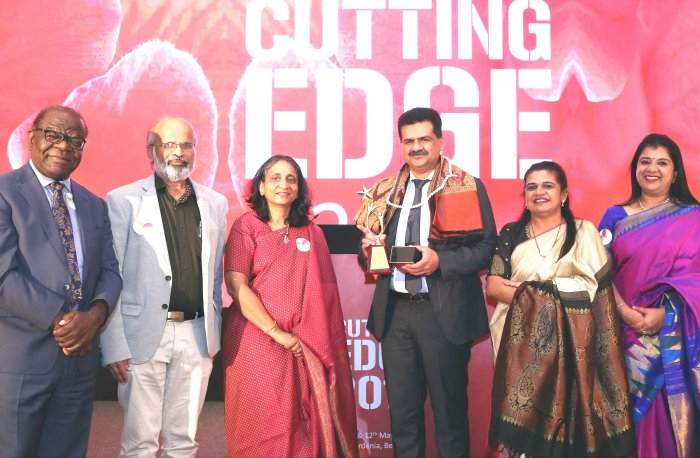
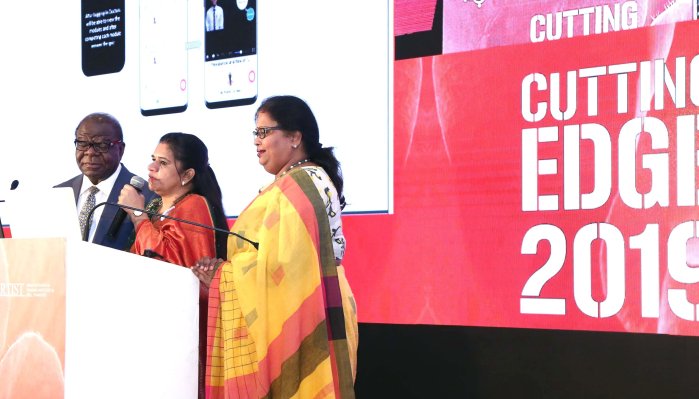
Bengaluru: Endometriosis in teenagers can affect their fertility and are advised not to ignore symptoms of endometriosis. Women as a mother, complexity of her health and womans pride, which were core subjects at the two-day Cutting Edge 2019 Conference in Bengaluru, had a session on endometriosis in teenagers, and the doctors discussed various diagnostic and treatment options on whole gamut of womens health.
It has been noticed that endometriosis in teenagers is not detected often because the patients go to GPs (general practitioner) about heavy and extremely painful periods, instead of visiting a gynecologist. Detection of endometriosis is not done as most GPs brush off symptoms as womens problems and offer painkillers. It is time to wake up.
Women today make up 49.6% of the total population of world. Team ARTIST, under the leadership of Dr. Hema Divakar, held conference on womens health, infertility and endoscopy. Dr. Hema said in her opening remarks that “it is amazing to see how we as obgyn are challenged from basic requirements of bringing down the maternal mortality to the complex luxuries of aesthetic surgery.

Dr. Hema Divakar, CEO of ARTIST (Asian Research & Training Institute for Skill Transfer) which hosts the annual Cutting Edge conferences, said We are dealing with a spectrum of problems in women’s healthcare to cater to the need of the girls and women rather than being judgmental on the need for surgeries like vaginal rejuvenation. It is the question of offering a choice to the empowered girls and women, let them make the decision.”
Post-lunch session on Saturday saw a host experts grapple with issues of male infertility and the need of correct evaluation for better treatment method.
The central theme was decline in male fertility and various causes. Obesity and lifestyle emerged as main culprits in the decline of quality of sperms. Obesity has taken toll of potency and in turn is affecting chances of pregnancy. Doctors advised against obesity and sought changes in lifestyle, if young couple plans on having children.
During various scientific sessions doctors also spoke on adoption of various fertility procedures life Intrauterine Insemination (IUI), In vitro fertilization (IVF) and Intracytoplasmic Sperm Injection (ICSI).

IUI is a fertility treatment that involves placing sperm inside a woman’s uterus to facilitate fertilization. IVF is a process of fertilisation where an egg is combined with sperm outside the body, in vitro, and ICSI is a specialised form of In Vitro Fertilisation (IVF) that is used primarily for the treatment of severe cases of male-factor infertility. ICSI involves the injection of a single sperm directly into a mature egg.

City Today News

(citytoday.media)

9341997936