
More than 40 transplant recipients and families come together ahead of World Heart Day; programme highlights long-term recovery, advanced care and the urgent need for organ donation
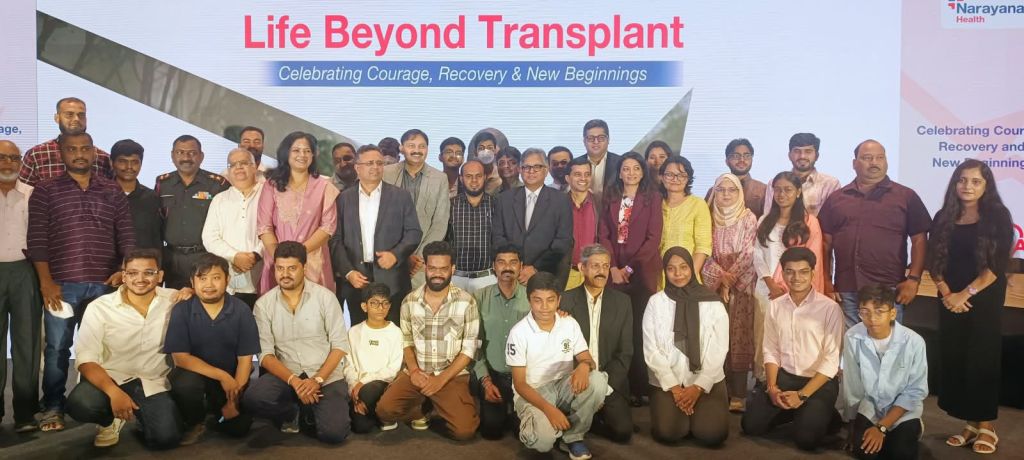
Bengaluru, September 23, 2026: For patients battling end-stage heart or lung failure, a transplant can mean more than overcoming a life-threatening illness—it can open the door to a new beginning. Ahead of World Heart Day on September 29, Narayana Health City, Bengaluru, brought together more than 40 heart and lung transplant recipients and their families to celebrate their journeys and the gift of a second chance at life.
Narayana Health City has performed 136 heart and lung transplants to date, including complex adult and paediatric procedures. The programme combines advanced surgical expertise, critical-care facilities, mechanical circulatory support and multidisciplinary transplant care to manage some of the most challenging cases.
For transplant recipients, however, the success of a transplant goes beyond the operating theatre. According to Narayana Health, 95% of recipients have returned to meaningful lives, with some children resuming school and others returning to sports and other activities they once thought were no longer possible.
The gathering also featured inspiring stories of long-term recovery. V.K., a 16-year heart transplant survivor, represents one of the programme’s longest surviving recipients. S.S., who underwent a heart transplant after suffering from end-stage heart failure, later won a gold medal at the World Transplant Games.
The programme has also treated patients across different age groups. Baby K., who received a donor heart at just 14 months, became India’s youngest heart transplant recipient, while K.S., who underwent a combined heart-lung transplant at 68, continues to live an active life at 75.
The programme has also handled complex combined heart and lung transplants, including patients such as A.F.M., transplanted in 2022, and N.N., transplanted in 2025. Such procedures require close coordination between transplant surgeons, cardiologists, pulmonologists, intensivists and other specialist teams.
For critically ill patients who cannot safely wait for a donor organ, Narayana Health City also uses advanced ECMO (Extracorporeal Membrane Oxygenation) and Ventricular Assist Devices (VADs) to provide life-sustaining support. These technologies can help stabilise selected patients with severe heart or respiratory failure while they await transplantation.
Narayana Health City has also emerged as a destination for transplant patients from across the country. Nearly 50% of its 136 heart and lung transplant recipients have come from outside Karnataka, representing patients from 19 Indian states. The programme has also treated international patients, including recipients from Sudan.
While celebrating successful transplant journeys, the event also drew attention to India’s continuing shortage of donor organs. Many patients across the country remain on transplant waiting lists, making organ donation a critical public-health need.
Narayana Health urged the public to learn more about organ donation and consider registering as donors. For patients waiting for a suitable organ, a donor pledge can ultimately mean the difference between continued uncertainty and a second chance at life.
The stories celebrated at the event reinforced a message that extends beyond transplantation: medical innovation can save a life, but successful recovery gives patients the opportunity to live that life fully.
City Today News 9341997936


You must be logged in to post a comment.