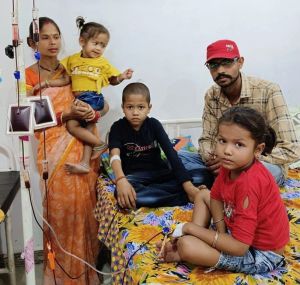
National, August 26, 2026: This Raksha Bandhan, the story of siblings Som and Khushi Yadav offers a moving reminder that the bond between a brother and sister can extend far beyond tradition. At just two years of age, Khushi became a blood stem cell donor for her elder brother Som, who was battling thalassemia major, giving him a chance at a healthier life.
The story, shared by DKMS Foundation India, a non-profit organisation working to support patients with blood cancer and blood disorders including thalassemia and aplastic anaemia, also highlights the importance of Human Leukocyte Antigen (HLA) matching and timely access to blood stem cell transplantation.
India continues to face a major burden of thalassemia, with more than 10,000 children estimated to be born with thalassemia major every year. The inherited blood disorder affects the body’s ability to produce healthy haemoglobin, which carries oxygen throughout the body. In severe cases, patients require regular blood transfusions and ongoing medical care. For eligible patients, a blood stem cell transplant can potentially provide a curative treatment.
Som was only five months old when he was diagnosed with thalassemia major. His younger sister, Saumya, was subsequently diagnosed with the same condition. Neither child had a fully matched donor within the family, leaving them dependent on regular transfusions. For their financially vulnerable family living in a small village, arranging blood, medicines and continuing treatment every month was a difficult and uncertain task.
The family’s hopes changed after Khushi, their third child, was born in 2021. The family later received free HLA typing through a camp organised by DKMS in collaboration with Narayana Health and KASH Foundation. The results brought unexpected news: Khushi was a perfect 12/12 HLA match for Som.
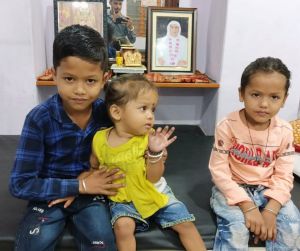
In 2023, when she was only two years old, Khushi donated her blood stem cells to her brother. Today, Som is healthy, attends school and is able to lead a normal life.
Khushi was too young to understand the significance of her donation, but her stem cells became the key to giving her brother a new lease of life. Their story gives a deeper meaning to Raksha Bandhan, traditionally associated with a brother’s promise to protect his sister. It shows that love, courage and protection between siblings can come in many forms, regardless of age.
The journey of Som and Khushi also underscores the challenges faced by thousands of patients who do not have a suitable donor within their families. Finding a compatible unrelated donor can be particularly difficult in India because of its vast genetic diversity.
Patrick Paul, Executive Chairman, DKMS Foundation India, said Som and Khushi’s story highlights both the emotional strength of sibling bonds and the need to improve access to suitable blood stem cell donors.
“Not every patient with a blood disorder is fortunate enough to find a matching donor within their family. India’s genetic diversity makes finding a compatible unrelated donor particularly challenging. Only 0.09% of Indians in the relevant age group are registered as blood stem cell donors,” he said.
Paul added that DKMS Foundation India works to help economically disadvantaged patients access high-resolution HLA typing and, where a family donor is unavailable, supports them in connecting with the global registry of unrelated blood stem cell donors.
As Raksha Bandhan is celebrated this year, Khushi’s story stands as a powerful example of how siblinghood can transcend traditional roles. Her small act of giving became a life-changing gift for her brother, proving that sometimes the greatest strength can come from the youngest member of a family.
City Today News 9341997936
 City Today News
You must be logged in to post a comment.