
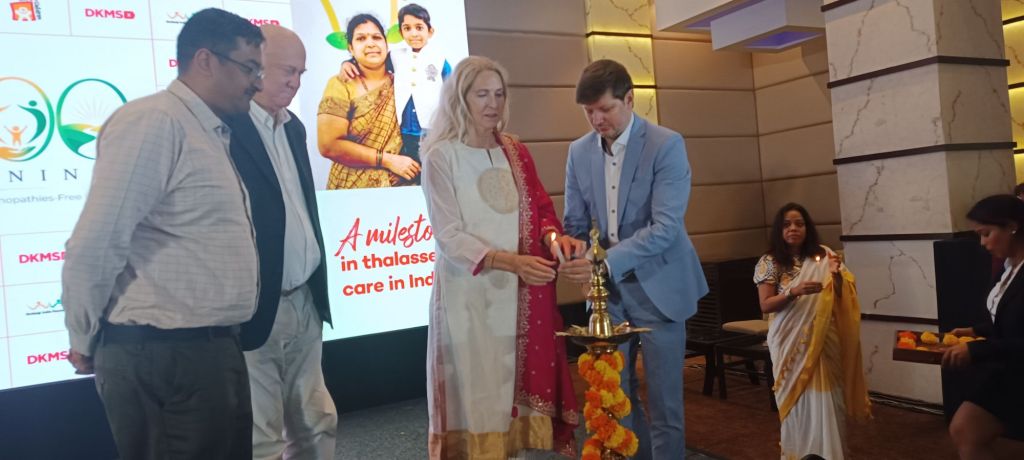
Bengaluru, September 4, 2026: In a significant milestone for paediatric healthcare in India, Sankalp India Foundation has completed 1,000 stem cell transplantations for children, offering new hope to young patients living with severe inherited blood disorders such as thalassemia.
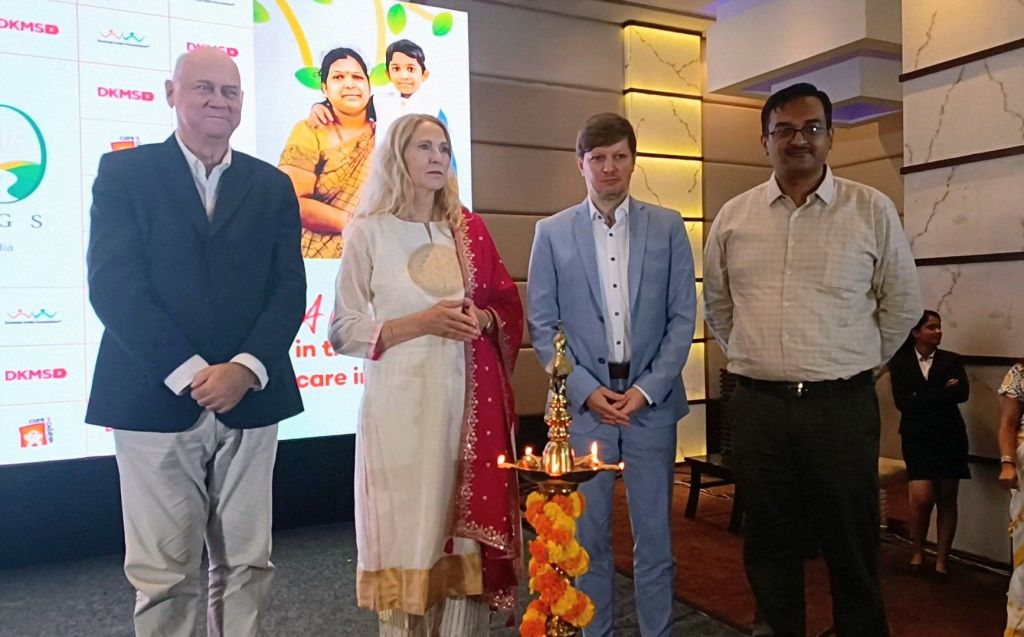
The achievement, themed “1,000 Beginnings,” will be celebrated in Bengaluru on September 5. The milestone also highlights the success of a partnership spanning more than a decade between Sankalp India Foundation, international nonprofit organisation DKMS, and medical and knowledge partner Cure2Children Foundation.
For children affected by severe thalassemia and other inherited blood disorders, stem cell transplantation can offer the possibility of a life free from frequent blood transfusions and lifelong treatment.
Of the 1,000 paediatric transplants carried out through Sankalp, DKMS has supported the transplantation costs of more than 820 children. Over the years, the partnership has expanded beyond financial assistance to include thalassemia management, transplantation infrastructure, diagnostics, specialist training and clinical research.
Dr. Elke Neujahr, Global CEO of DKMS, said the milestone demonstrated the impact of sustained collaboration.
“One thousand transplants show what long-term partnerships can achieve. Sankalp brings extraordinary local expertise and commitment, while Cure2Children contributes vital medical knowledge. Together, we can help make access to a cure a reality for more children. This is the kind of sustainable collaboration we want to build — in the country, for the country.”
A Decade of Expanding Access and Care
Sankalp launched its first paediatric bone marrow transplantation programme in Bengaluru in 2015 in partnership with Cure2Children. The collaboration with DKMS also began the same year with free HLA typing and has since expanded across various stages of the treatment pathway.
Today, DKMS supports HLA typing for patients and their families, thalassemia management and transplantation costs. The organisation has also contributed towards strengthening specialised paediatric bone marrow transplantation capacity and molecular diagnostics in Bengaluru and Ahmedabad.
The partnership further includes specialist training for nurses and, since 2025, collaboration in clinical research.
Rajat Kumar Agarwal, President of Sankalp India Foundation, said the achievement was about much more than numbers.
“For us, these 1,000 transplants represent 1,000 new beginnings. They demonstrate that a cure can become accessible when organisations bring their strengths together with a shared purpose. This milestone also proves that centres working in resource-constrained settings can achieve world-class outcomes and internationally recognised quality while keeping transplantation affordable and accessible.”
He added that partnerships with organisations such as DKMS and Cure2Children have played a crucial role in expanding access to curative treatment for children.
Sankalp India Foundation currently provides care to more than 3,000 children through 30 comprehensive thalassemia day-care centres. It also operates two paediatric bone marrow transplantation centres in Bengaluru and Ahmedabad.
Its prevention network includes 87 centres across 81 districts, where more than 220,000 couples have been screened as part of efforts to prevent and reduce the burden of thalassemia and other haemoglobin disorders.
International Recognition for Quality of Care
The partnership has also achieved an important milestone in quality standards. The BMJH-Sankalp Centre for Pediatric Hematology, Oncology and BMT in Bengaluru has become the first programme in India to receive JACIE accreditation.
JACIE accreditation is internationally recognised in the field of hematopoietic stem cell transplantation and cellular therapy. It reflects compliance with stringent standards covering clinical care, stem cell collection and processing, quality management and patient safety.
The accreditation reinforces the possibility of delivering internationally benchmarked transplant care sustainably in India without necessarily relying on increasingly expensive and complex models of treatment.
Shaheem’s Journey: One of 1,000 New Beginnings
Behind the milestone are the stories of hundreds of children and their families.
Muhammad Shaheem from Karnataka was diagnosed with severe thalassemia when he was just five months old. Years of regular blood transfusions resulted in severe iron overload, affecting his heart and liver and making a stem cell transplant particularly challenging.
His younger sister, Zara, was identified as a fully HLA-matched donor. Following intensive preparation and counselling at the Sankalp-BMJH Centre in Bengaluru, the family decided to proceed with the transplantation.
Shaheem’s mother, Zareena, understands the burden of the disease personally. Living with thalassemia major herself, she continues to require regular treatment and blood transfusions.
“As a mother, I wanted my son to have the chance to live a life that is not determined by thalassemia. We were afraid, but the team gave us the confidence to move forward. Seeing Shaheem today makes that decision worth everything,” she said.
The completion of 1,000 paediatric stem cell transplants marks both a celebration of what has been achieved and a renewed commitment towards the future.
For Sankalp India Foundation and its partners, the next goal is to enable more children to access curative treatment while continuing to strengthen the healthcare infrastructure needed to deliver high-quality and sustainable care.
The milestone represents another important step towards Sankalp’s long-term vision of building a thalassemia- and haemoglobinopathies-free India by 2047.
City Today News 9341997936


